
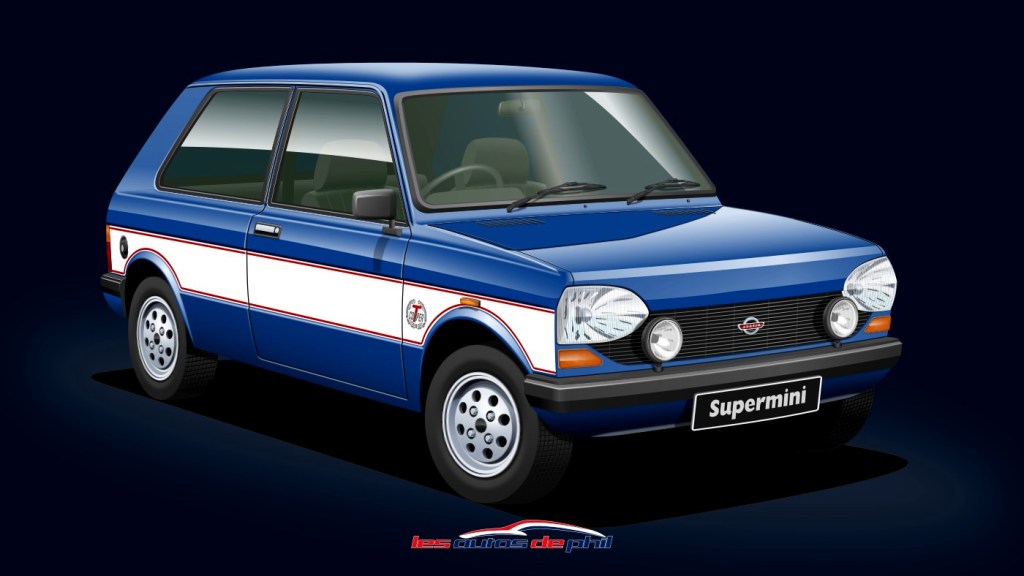
Austin Supermini, What if British Leyland had been ahead of the game?
FR – Les voitures qui ont connu de grands succès sont celles qui sont les plus difficiles à remplacer. En France, nous pouvons citer les exemples des Renaut 5 et Peugeot 205. En Angleterre, c’est la Mini qui a bénéficié d’une très longue carrière grâce à l’intérêt des acheteurs. Mais cela ne signifie pas pour autant que British Leyland n’ait pas étudié son remplacement, bien au contraire. De nombreux projets ont été imaginés, mais n’ont jamais vu le jour. Avec mon lecteur anglais Nate, passionné par le sujet, nous vous avons déjà proposé, à travers les projets Mini 2 et 3 déjà publiés, des successeurs potentiels.
Cette fois-ci, l’idée est d’explorer une autre approche qui tient compte de l’évolution du marché des véhicules citadins dans les années 70. A côté des petits véhicules tels que l’Autobianchi A112 et la Mini, se sont installés des véhicules un peu plus grands, plus pratiques et plus polyvalents : ce sont par exemple la Fiat 127, la Peugeot 104, la Renault 5 et bien d’autres encore. Ce segment de marché s’est réellement développé car répondant à une demande de véhicules accessibles, capables d’évoluer tant en ville qu’à la campagne. Au Royaume Uni, on les désigne sous le vocable de « Superminis ». Avec Nate, nous avons retenu ce nom de baptême pour faire une référence évidente à la fois au marché visé et à la Mini existante.
EN – Cars that have enjoyed great success are often the most difficult ones to replace. In France, we can cite the Renault 5 and Peugeot 205 as examples. In England, it was the Mini that enjoyed an exceptionally long career, thanks to its enduring appeal among buyers. But that does not mean that British Leyland did not consider replacing it — quite the contrary. Numerous projects were imagined, but never made it into production. Together with my English reader Nate, who is passionate about the subject, we have already presented potential successors through the Mini 2 and Mini 3 projects published previously.
This time, the idea is to explore another approach, one that takes into account the evolution of the city car market during the 1970s. Alongside small cars such as the Autobianchi A112 and the Mini, slightly larger, more practical and more versatile models began to establish themselves: the Fiat 127, Peugeot 104, Renault 5 and many others are good examples. This market segment really took off because it met a growing demand for affordable cars capable of being used both in town and in the countryside. In the United Kingdom, they were referred to as “Superminis”. Nate and I chose this name for our project as an obvious reference both to the market we are targeting and to the existing Mini.
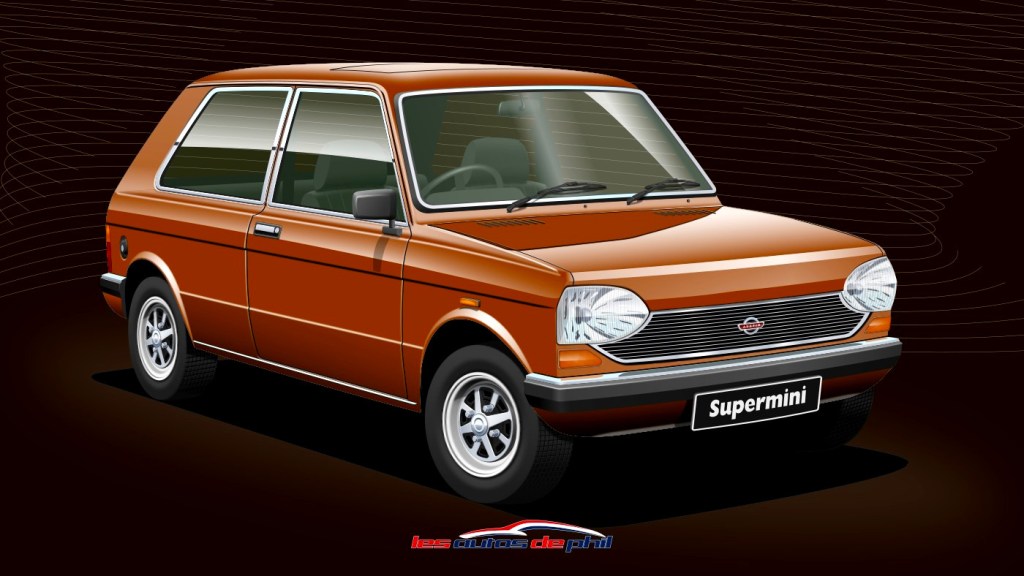
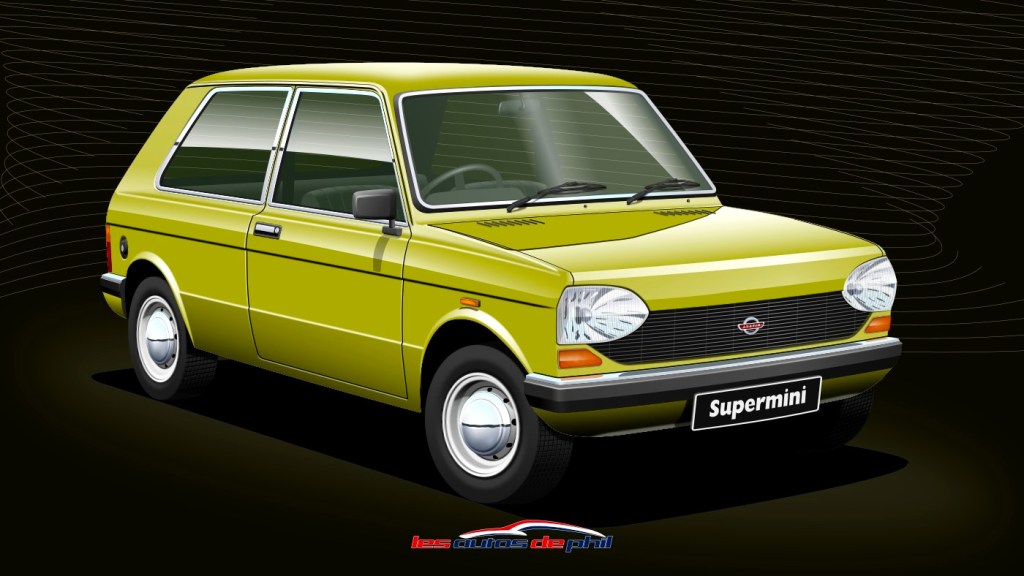
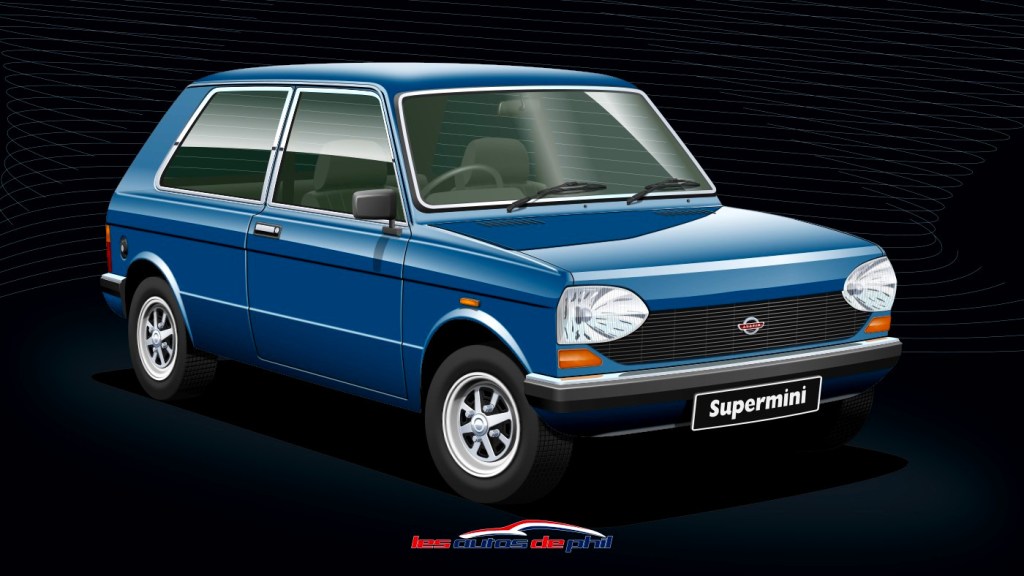
FR – Encore une fois, nous nous sommes basés sur des projets initiés par British-Leyland, qui avait bien exploré ce segment de marché. Il y eut différentes études dont la finalité fut l’Austin Metro de 1980. Mais Nate a émis l’hypothèse d’une plus grande réactivité de la part de ce constructeur, qui aurait pu lancer cette Supermini dès le début des années 70, faisant ainsi de lui l’un des premiers à investir ce marché.
Nous sommes donc repartis du projet BMC 9X pour la forme générale tout en modifiant les points suivants : le porte-à-faux arrière est légèrement plus long afin de gagner en volume de coffre et la face avant est fortement inspirée de celle du prototype ADO88 Pininfarina. Ce dernier nous avait d’ailleurs déjà servi de base pour la Mini 3, assurant ainsi une continuité d’air de famille entre les deux générations de modèles. Ici et afin de respecter les contraintes techniques de l’époque, les clignotants sont séparés et disposés sous les phares avec une forme qui s’harmonise au mieux au profil de calandre.
Nous conservons de classiques pare-chocs en métal garnis de bandes caoutchouc, en lieu et place de boucliers en plastique dont nous laissons le privilège à la Renault 5 !
Nous cherchons à muscler le design des panneaux latéraux en appliquant des lignes de style similaires à ce qu’a fait Simca Chrysler sur ses 1307/1308. C’est bien dans l’air du temps de l’époque.
EN – Once again, we based our work on projects initiated by British Leyland, which had already explored this market segment quite extensively. Several studies were carried out, ultimately leading to the Austin Metro of 1980. But Nate put forward the idea that the manufacturer might have been more responsive, and could have launched this Supermini as early as the beginning of the 1970s, thereby becoming one of the first manufacturers to enter this market.
We therefore went back to the BMC 9X project for the overall shape, while modifying the following details: the rear overhang is slightly longer in order to increase boot capacity, while the front end is strongly inspired by that of the ADO88 Pininfarina prototype. We had already used the latter as the basis for the Mini 3, thus ensuring a consistent family resemblance between the two generations of models. Here, and in order to respect the technical constraints of the period, the indicators are separate and positioned beneath the headlights, with a shape that blends as harmoniously as possible into the grille design.
We have retained classic metal bumpers fitted with rubber strips, rather than the plastic bumpers that we will leave to the Renault 5!
We wanted to give the side panels a more muscular appearance by applying styling lines similar to those used by Simca-Chrysler on its 1307/1308 models. It was very much in keeping with the styling trends of the period.
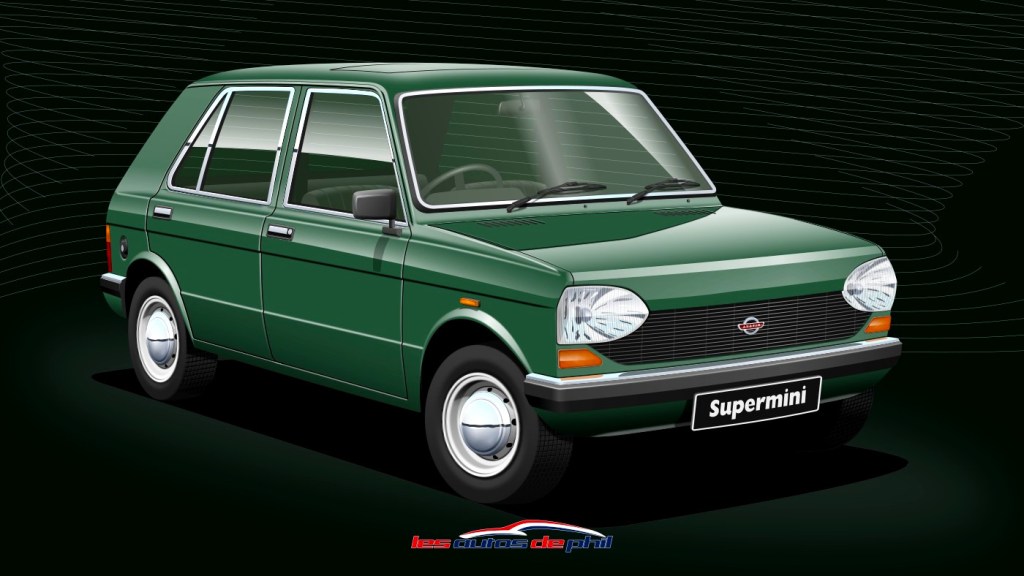
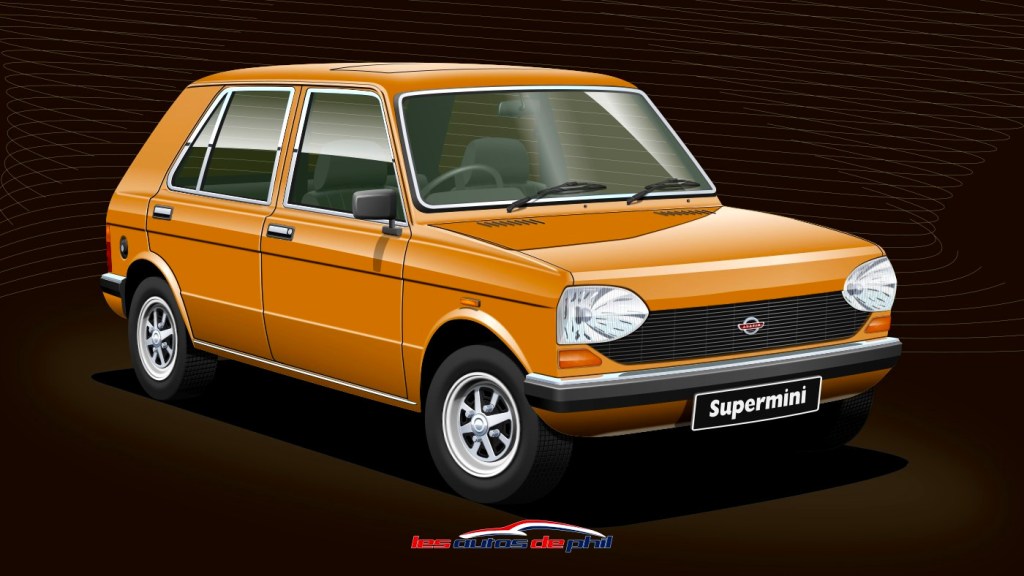
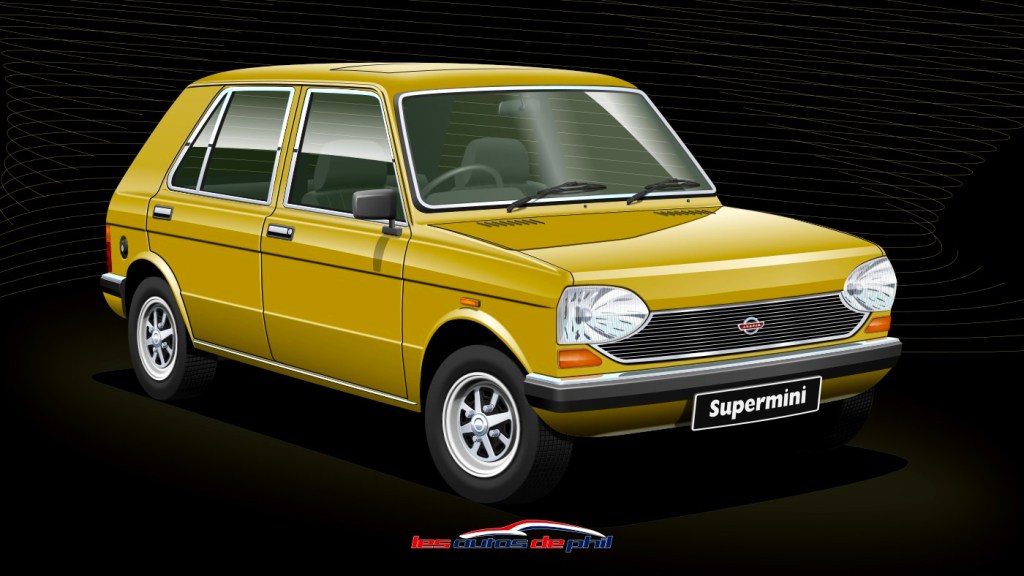
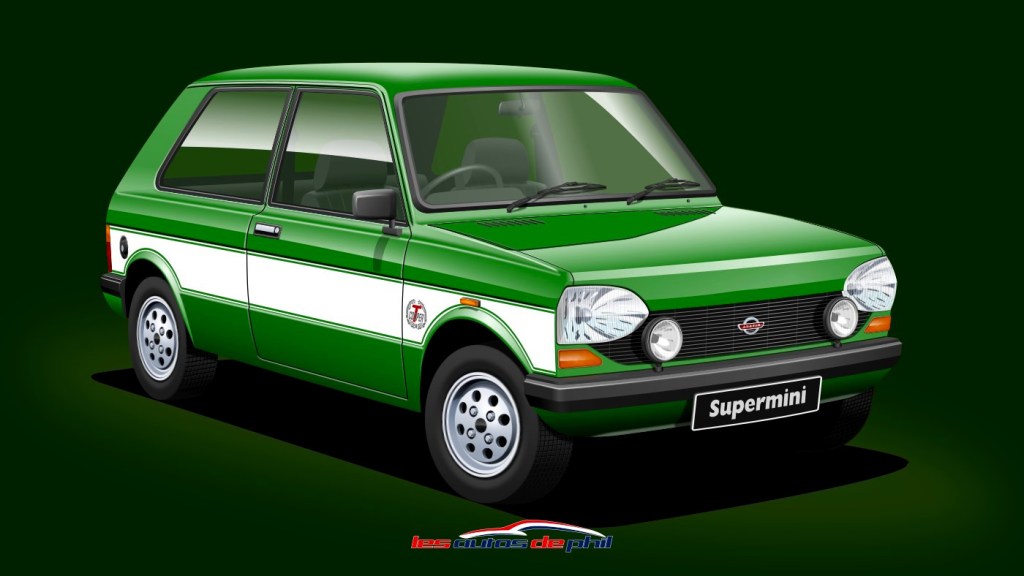
FR – Enfin, pour répondre aux nécessités du marché, nous imaginons des déclinaisons trois et cinq portes de la version deux volumes. Celles-ci permettant de se battre à armes égales avec ses nombreuses concurrentes proposées également dans ces configurations. Nous imaginons aussi une version sportive « Cooper », qui aurait été introduite dans la deuxième moitié des années 70, pour suivre le mouvement des petites sportives initié par la Golf GTI.
EN – Finally, to meet the demands of the market, we have imagined three- and five-door versions of the hatchback. These would have allowed the Mini to compete on equal terms with its many rivals, which were also offered in these configurations. We have also imagined a sporty “Cooper” version, which would have been introduced in the second half of the 1970s, following the trend for small performance cars initiated by the Golf GTI.
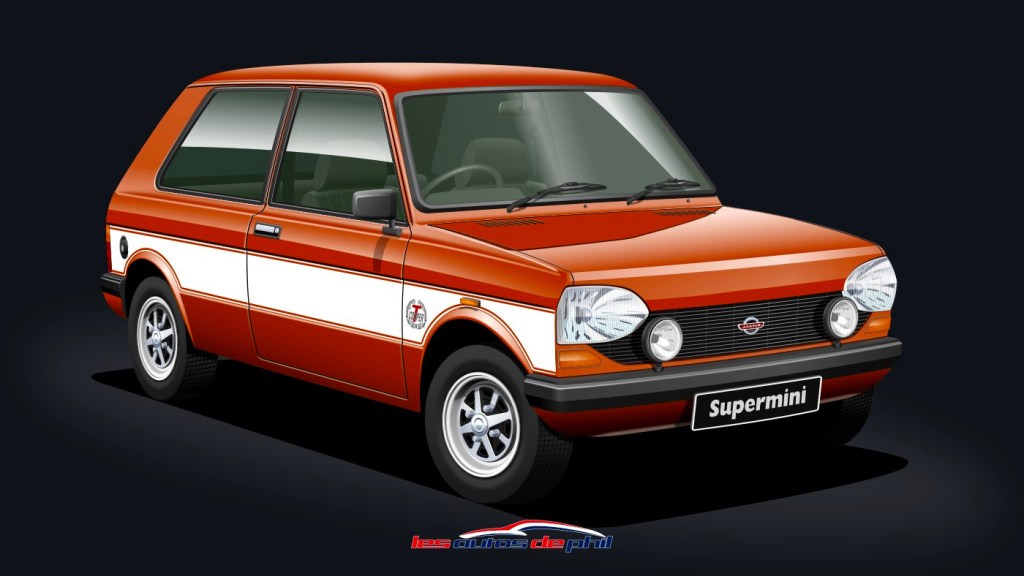
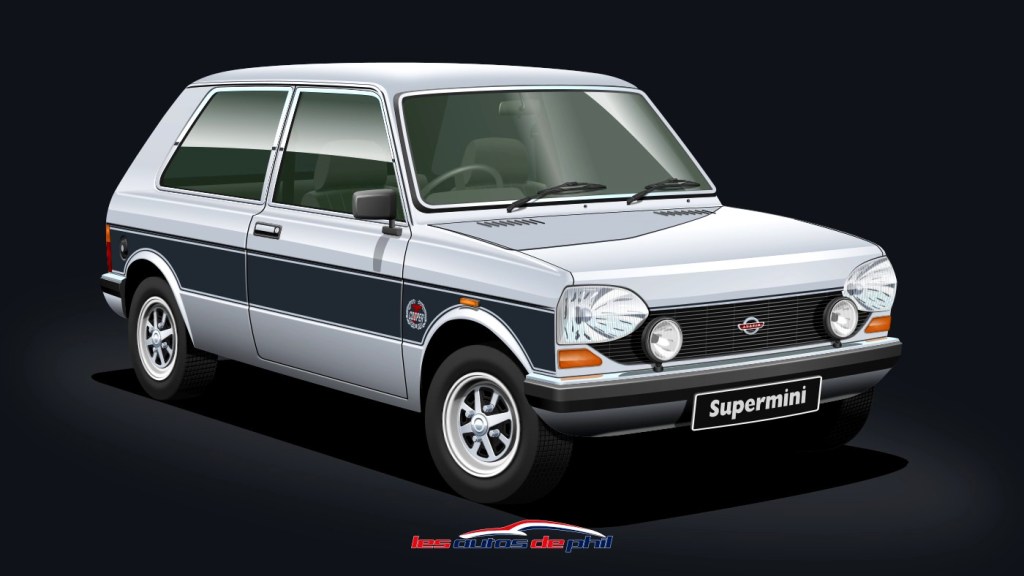
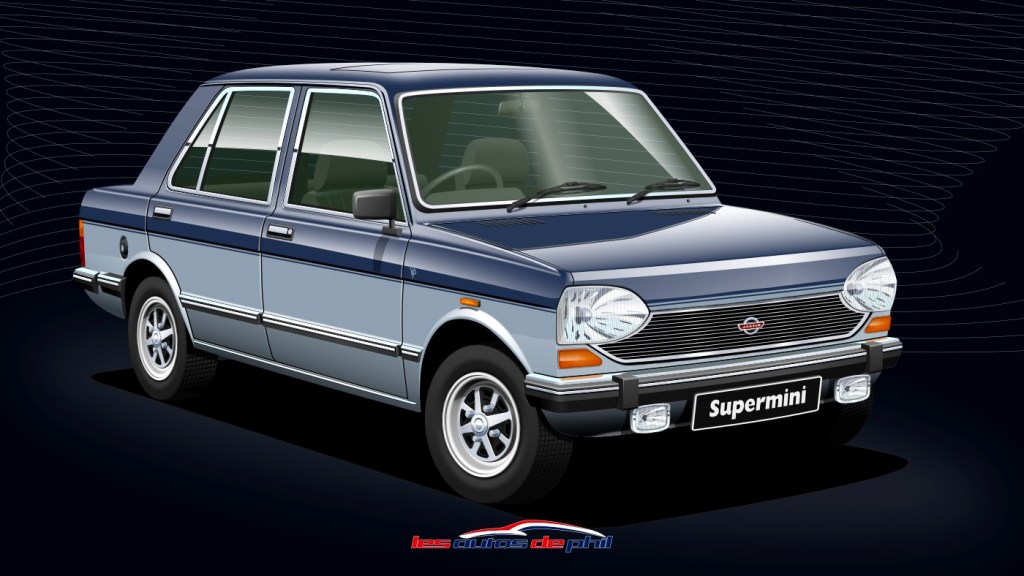
FR – Nous allons encore plus loin en imaginant une berline à quatre portes pouvant contrer la Renault 7 sur les marchés friands de ce type de carrosserie, dont la France ne fait pas partie ! Nous lui donnons une connotation plus haut de gamme car, à l’époque, les trois volumes étaient encore perçus plus statutaires que les deux volumes.
EN – We have taken the idea even further by imagining a four-door saloon capable of taking on the Renault 7 in markets where this type of body style was particularly popular — France being notably absent from that list! We have given it a more upmarket character because, at the time, three-box saloons were still perceived as more prestigious than hatchbacks.
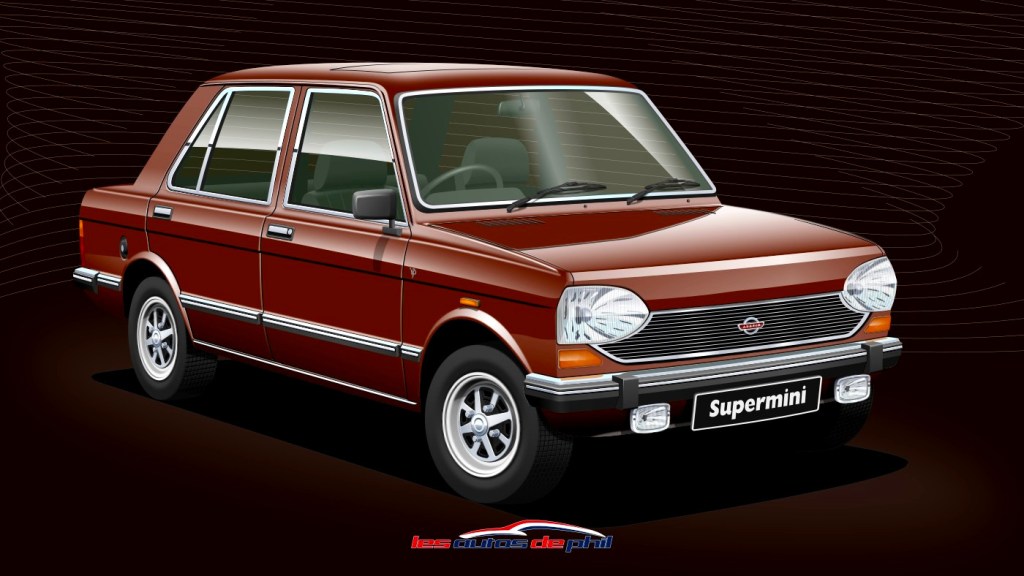
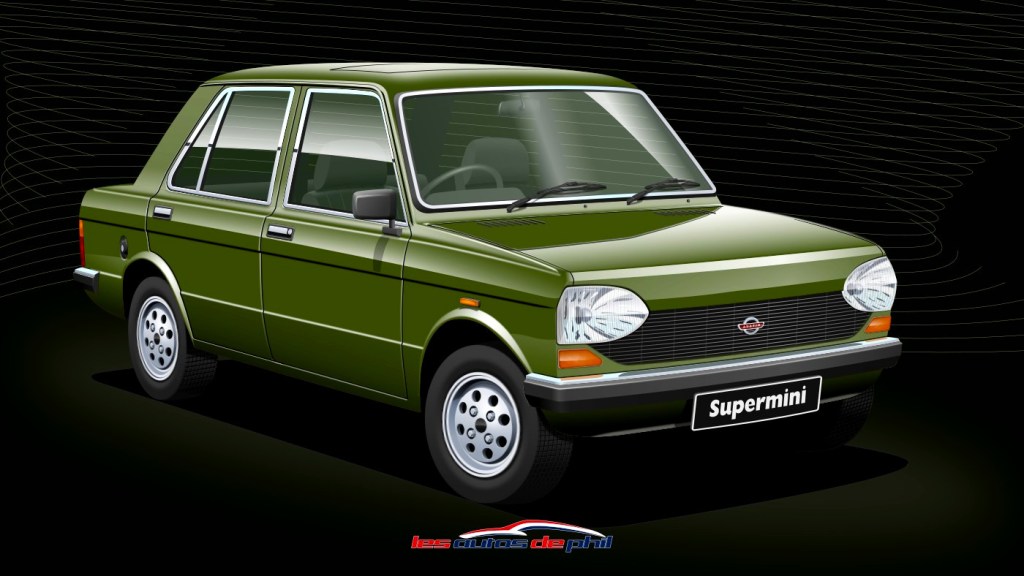
FR – Alors, que pensez-vous de cette proposition ?
EN – So, what do you think of this proposal?


Votre commentaire