

Peugeot 106: the true successor to the 205?
FR – Au moment de songer à la relève de la 205, Peugeot se trouvait face à un dilemme : malgré son âge avancé, la citadine se vendait encore à merveille. Pas question, donc, de sacrifier cette poule aux œufs d’or. La direction décide alors de prolonger sa carrière, tout en l’accompagnant de deux nouveaux modèles. D’un côté, la 306, chargée de remplacer la 309 mais aussi de séduire les clients de la 205 désireux de monter en gamme. De l’autre, la 106, destinée à combler le vide laissé par la 104 et à offrir une alternative moderne aux fidèles de la 205 en quête de nouveauté.
EN – When the time came to think about replacing the 205, Peugeot faced a real dilemma: despite its age, the little hatchback was still selling extremely well. There was no question of sacrificing this golden goose. The management therefore decided to keep it in production, while introducing two new models alongside it. On one side, the 306, designed to replace the 309 but also to win over 205 owners looking to move upmarket. On the other, the 106, meant to fill the gap left by the discontinued 104 and to offer a more modern alternative to 205 loyalists eager for novelty.
Une gamme complète – A complete range
FR – Présentée au Salon de Francfort en 1991, la 106 est d’abord proposée uniquement en trois portes et motorisations essence. La gamme s’étend pourtant déjà de la modeste XN de 45 ch à la sportive XSI de 100 ch. L’année suivante, deux évolutions majeures apparaissent : la version cinq portes et le moteur diesel. Peu à peu, la 106 prend son envol et parvient à répondre aux attentes variées de la clientèle. À l’image de la 205, elle sera déclinée en de nombreuses séries, qu’elles soient régulières ou limitées. En 1993 apparaissent des appellations bien connues comme Rallye, Griffe, Roland-Garros ou encore Zénith : une année charnière pour la 106.
EN – Unveiled at the 1991 Frankfurt Motor Show, the 106 was initially offered only as a three-door with petrol engines. Yet the lineup was already fairly broad, ranging from the modest 45 hp XN to the sporty 100 hp XSI. The following year, two major additions arrived: a five-door body style and a diesel engine. Step by step, the 106 spread its wings and succeeded in meeting the varied expectations of its customers. Like the 205, it would be offered in numerous versions, both standard and special editions. In 1993, familiar names appeared: Rallye, Griffe, Roland-Garros and Zénith — clearly a milestone year for the 106.
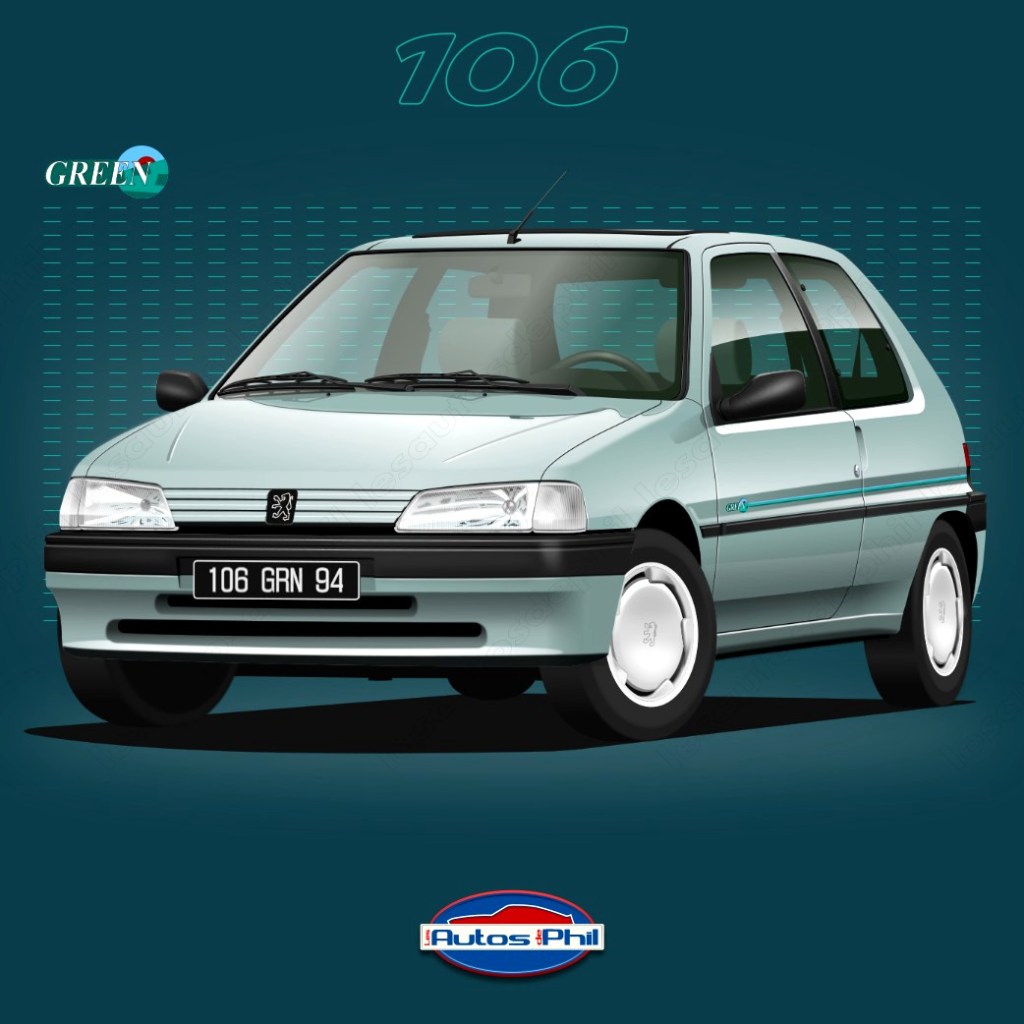
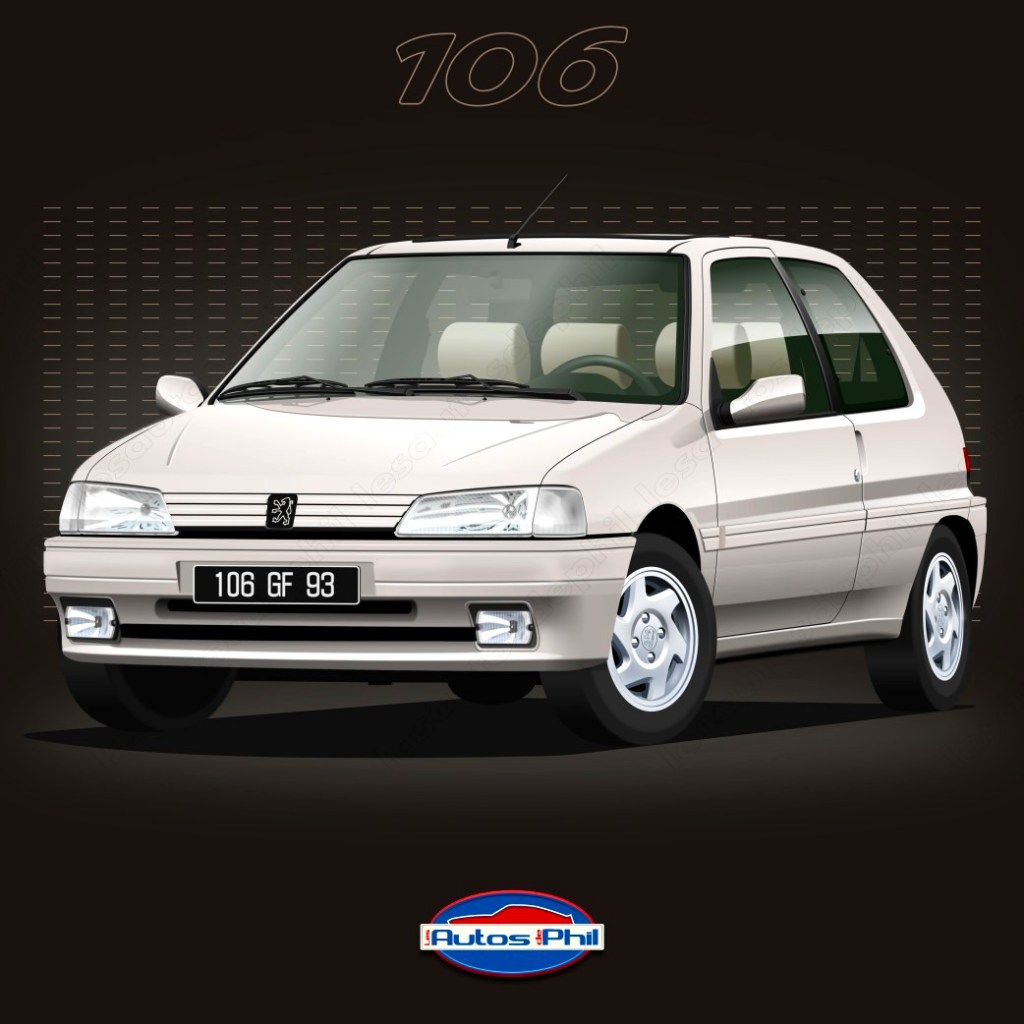
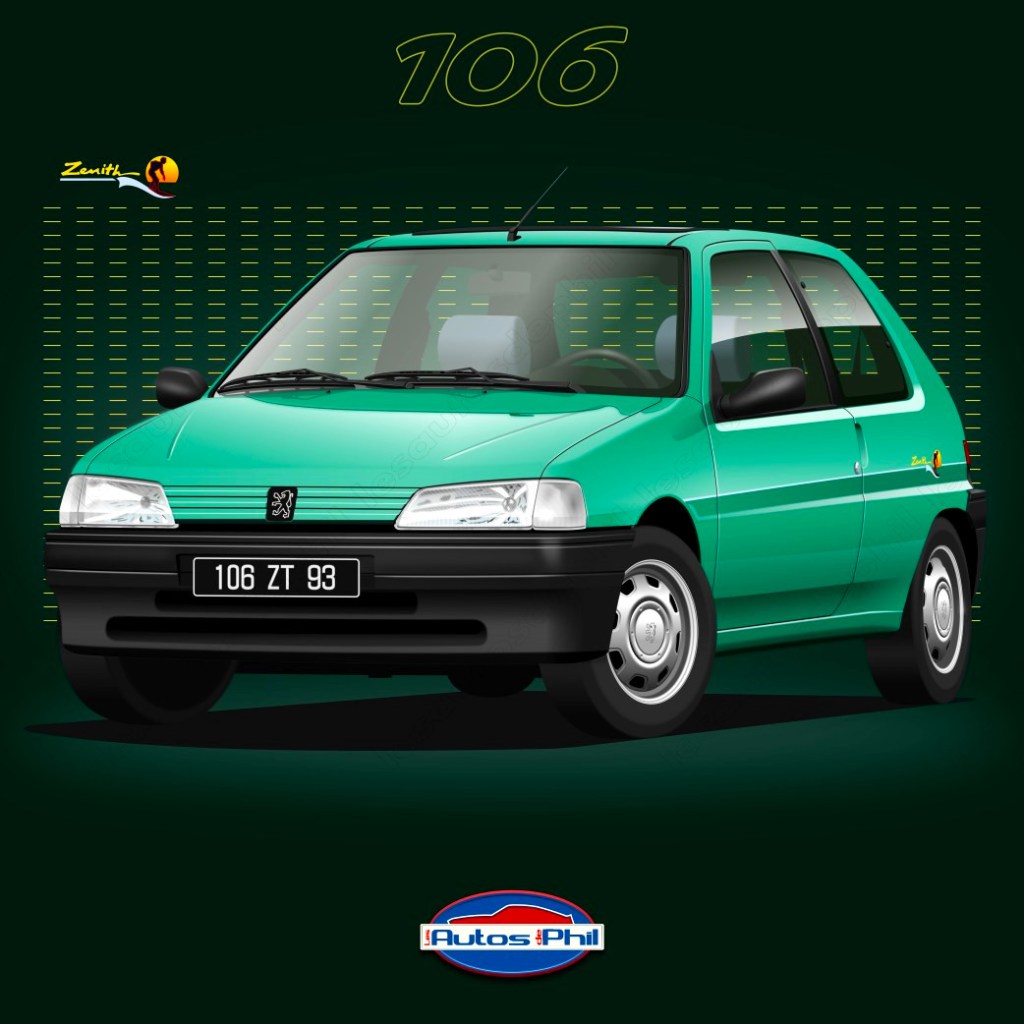
Peugeot 106 MK 1, Green, Griffe and Zenith (click on images to enlarge)
FR – Le printemps 1996 marque un tournant avec un restylage important. Les anciennes appellations XN, XR et XT cèdent la place aux plus évocatrices Kid, Equinoxe et Symbio. Mais l’évolution la plus marquante se situe au sommet de la gamme : la nouvelle S16 de 120 ch remplace la XSI de 105 ch. Plus puissante, mieux équipée et soignée dans sa présentation, elle reprend clairement le flambeau de la 205 GTI, disparue entre-temps.
EN – Spring 1996 marked a turning point with a major facelift. The old XN, XR and XT trims were dropped in favor of more evocative names: Kid, Equinoxe and Symbio. But the biggest news came at the top of the range: the new 120 hp S16 replaced the 105 hp XSI. More powerful, better equipped and more refined in appearance, it quite obviously took up the mantle of the 205 GTI, which had disappeared in the meantime.
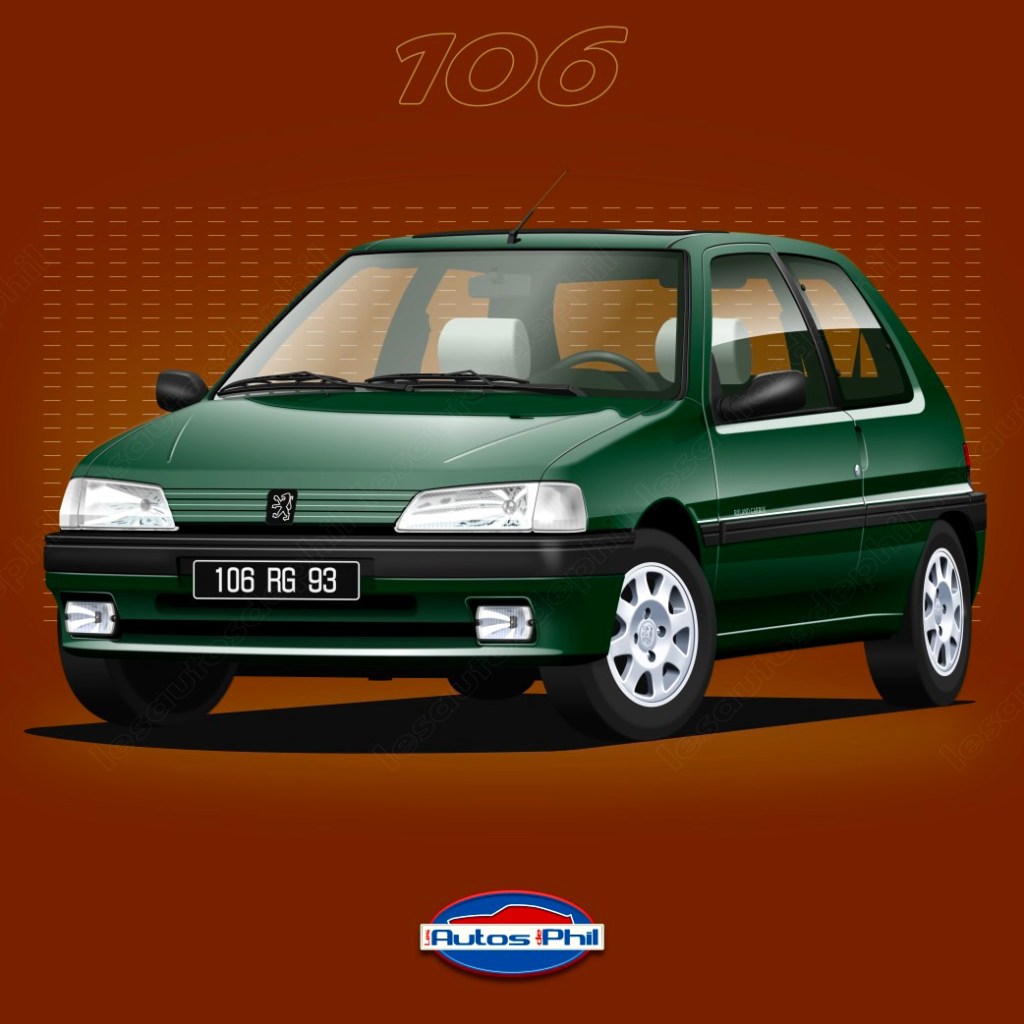
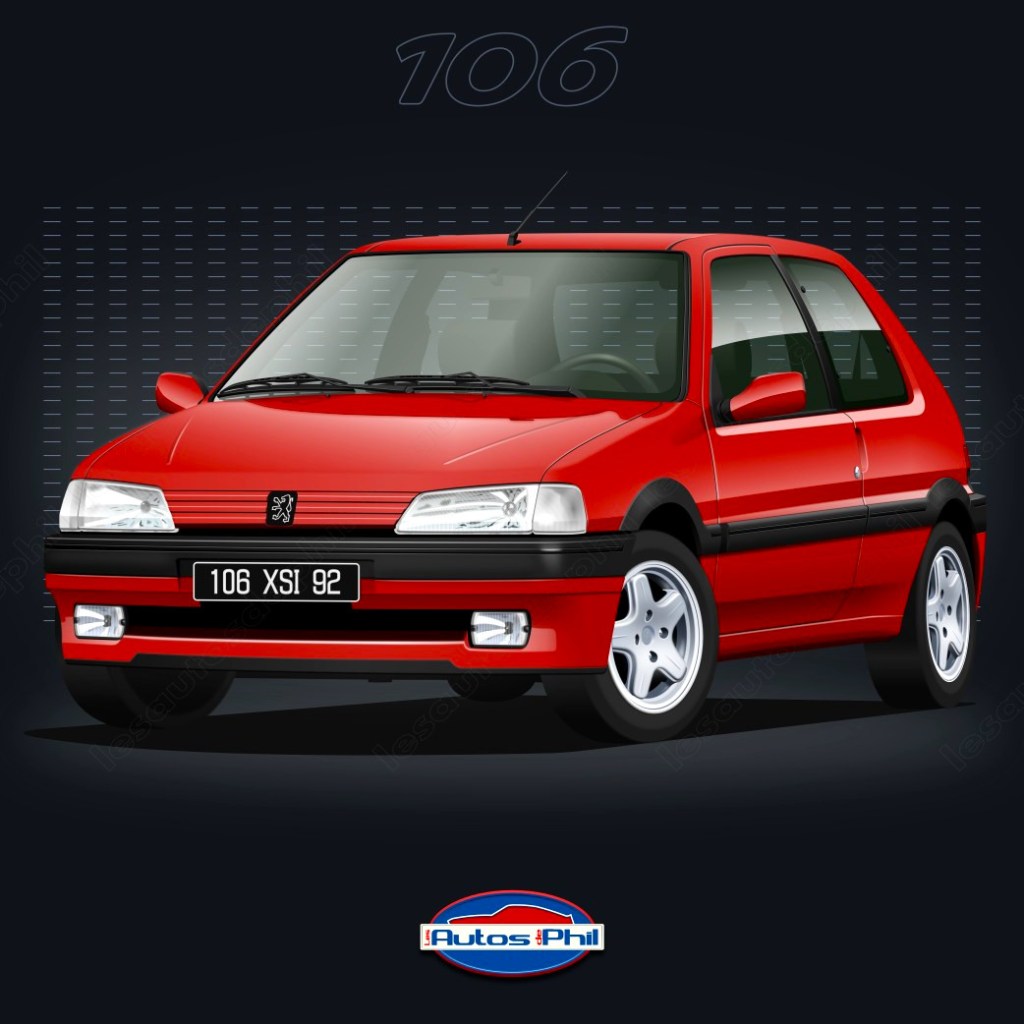
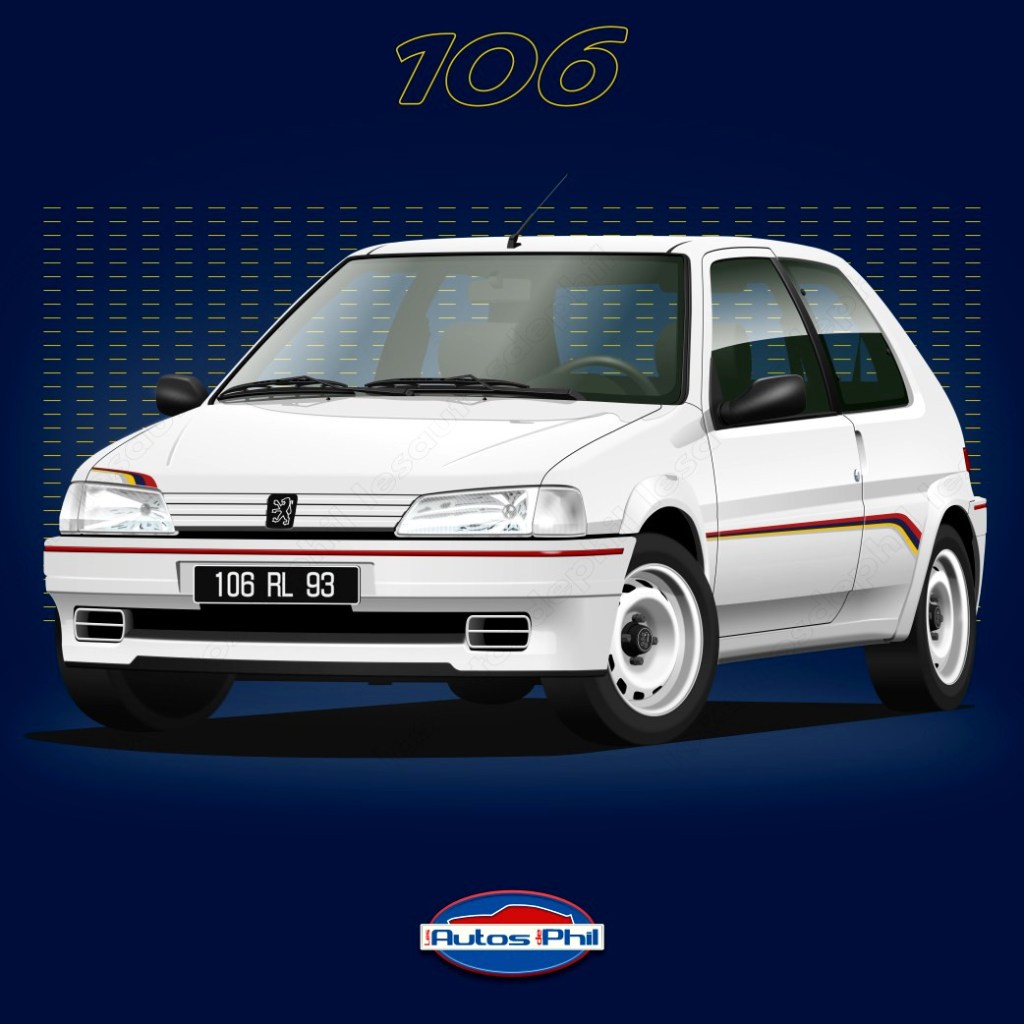
Peugeot 106 MK 1, Roland Garros, XSI and Rallye (click on images to enlarge)
FR – Comme sa devancière, la 106 phase 2 s’anime régulièrement de séries spéciales : Mistral et Inès de la Fressange en 1995, Eden Park en 1997, ou encore Enfant Terrible en 2001, qui reprend le look de la S16 mais avec un simple 1.4 de 75 ch, une sorte de « S16 Canada Dry ». À partir de 1999, la 106 doit affronter la concurrence interne de la nouvelle 206. Ses ventes déclinent progressivement jusqu’en 2003, année de son retrait, après une production totale de près de 2,8 millions d’exemplaires. Pas mal du tout !
EN – As with its predecessor, the phase 2 106 regularly came in special editions: Mistral and Inès de la Fressange in 1995, Eden Park in 1997, and the Enfant Terrible in 2001, which mimicked the look of the S16 but with a humble 1.4-liter 75 hp engine — a sort of “Canada Dry S16.” From 1999 onwards, however, the 106 faced tough internal competition from the new 206. Sales gradually declined until production ended in 2003, after nearly 2.8 million units had been built. Not bad at all!
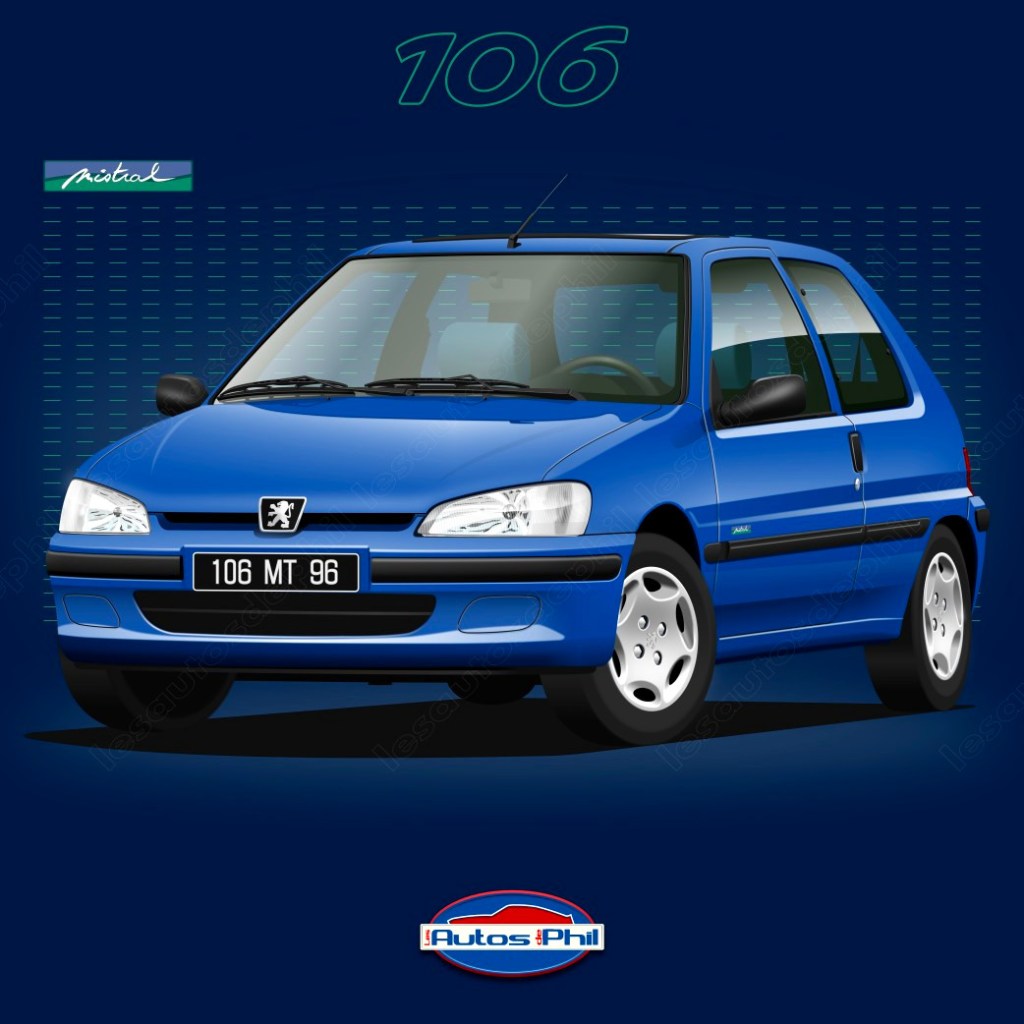
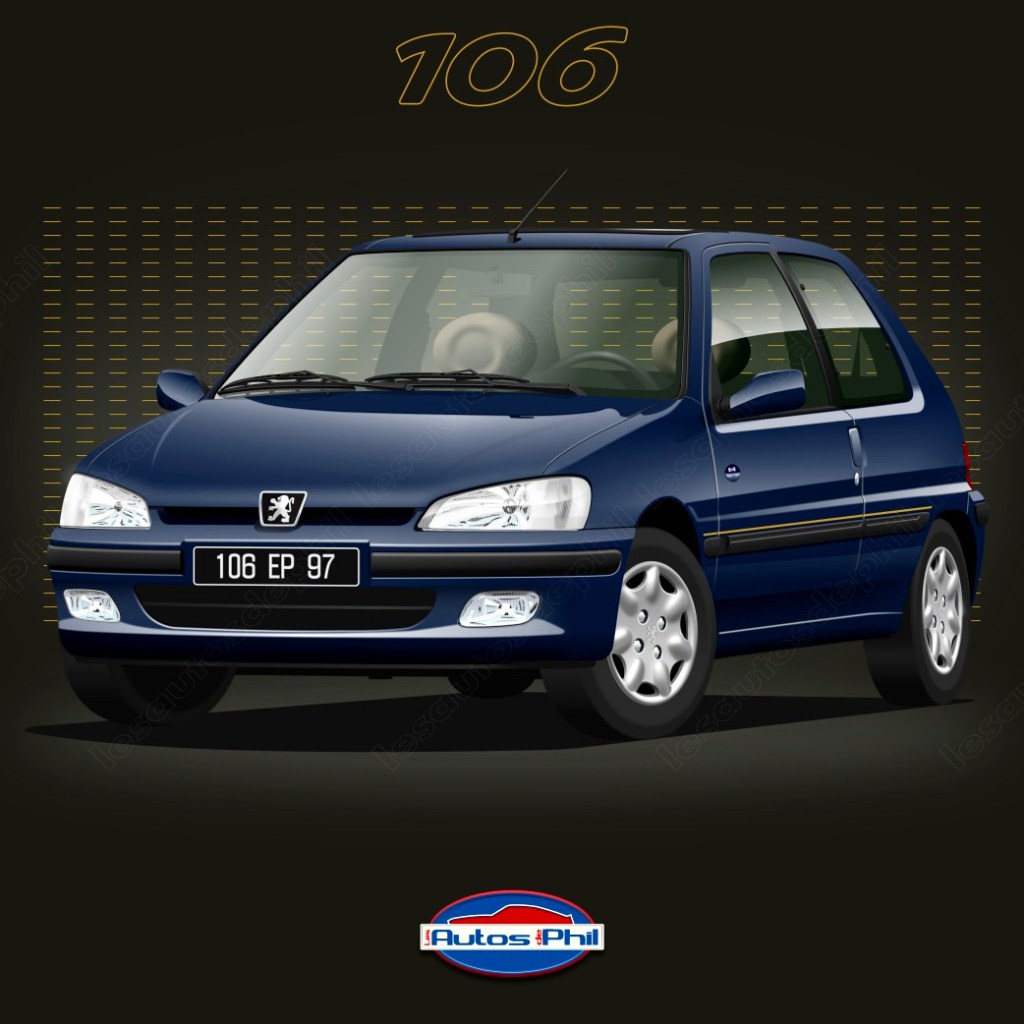
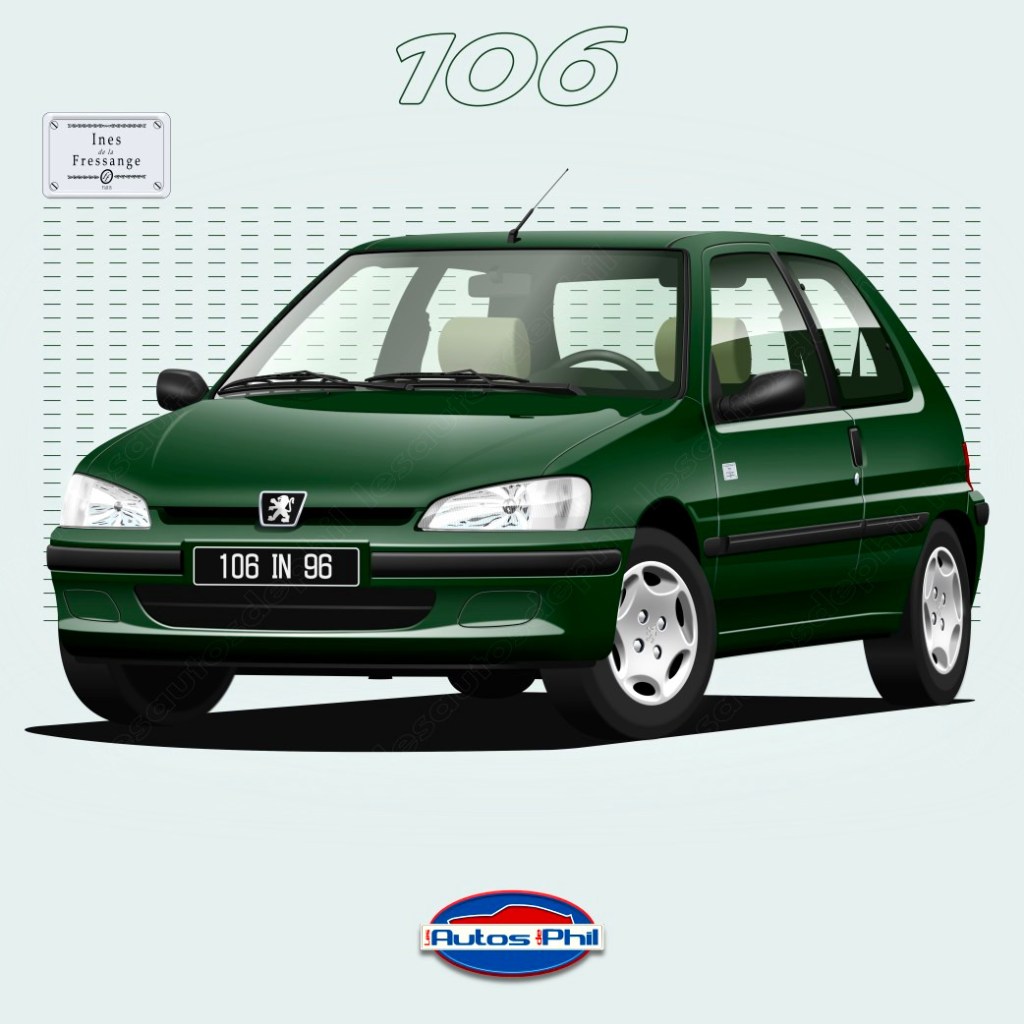
Peugeot 106 MK 2, Mistral, Eden-Park, Inès De La Fressange (click on images to enlarge)
Le style de la 106 – The style of the 106
FR – À sa sortie, le style de la 106, proche de celui de la 205, séduit le public et assure de bonnes ventes. Pourtant, à titre personnel, je n’étais pas totalement convaincu. Conçue sur la base technique de la Citroën AX, elle reprenait son architecture : un capot court associé à un habitacle imposant. À mes yeux, cela créait une disproportion, sans doute parce que j’étais trop habitué au long capot de ma 205 ! L’air du temps allait cependant vers les monospaces, et leur influence sur le design était bien réelle. La face avant accentuait encore cette impression de disproportion : capot plat et peu volumineux, calandre à barrettes emboutie dans la tôle (Le contraste entre les barrettes de couleur carrosserie avec les ouvertures d’air noires faisant cruellement défaut), phares larges mangeant trop la largeur de la face avant. Tout cela donnait une allure fragile à la voiture.
Peugeot en était-il conscient ? Sans doute, car le restylage de 1996 corrigea précisément ces points. Le porte-à-faux avant fut allongé, étirant le capot et rééquilibrant les volumes. La voiture prit 12 cm (3,68 m contre 3,58 m), se rapprochant ainsi des 3,70 m de la 205. Le capot bombé, les phares réduits, la nouvelle calandre inspirée de la 306 restylée et des pare-chocs plus imposants donnèrent enfin une impression de robustesse. La 106 gagna en prestance et monta en gamme. Notons que ce restylage coïncidait avec l’arrivée de la Citroën Saxo, dont la parenté avec la 106 était évidente.
Avec le recul, il est plus facile de juger de la pertinence d’un restylage, dans le cas de la 106, c’était clairement réussi.
EN – At launch, the styling of the 106, clearly influenced by the 205, won over the public and translated into strong sales. Personally, though, I wasn’t entirely convinced. Built on the Citroën AX’s platform, it shared the same architecture: a short hood combined with a tall cabin. To my eyes, this created an imbalance — perhaps I was simply too used to the long hood of my 205! The trend at the time was toward MPVs, and their influence on design was obvious. The front end only reinforced this feeling: a flat, shallow hood, a slatted grille stamped into the metal (losing the contrasting effect between body-colored slats and black air intakes), and oversized headlights dominating the width of the car. All of this gave the 106 a somewhat fragile look.
Did Peugeot share this view? Quite possibly, since the 1996 facelift addressed these very issues. The front overhang was extended, stretching the hood and restoring balance to the proportions. Overall length grew by 12 cm (3.68 m versus 3.58 m), bringing it close to the 205’s 3.70 m. A more domed hood, smaller headlights, a new grille inspired by the facelifted 306 and chunkier bumpers finally gave the car a more solid, upmarket appearance. It’s worth noting that this facelift coincided with the launch of the Citroën Saxo, whose close kinship with the 106 was obvious.
With hindsight, it’s clear that this was a very successful evolution.
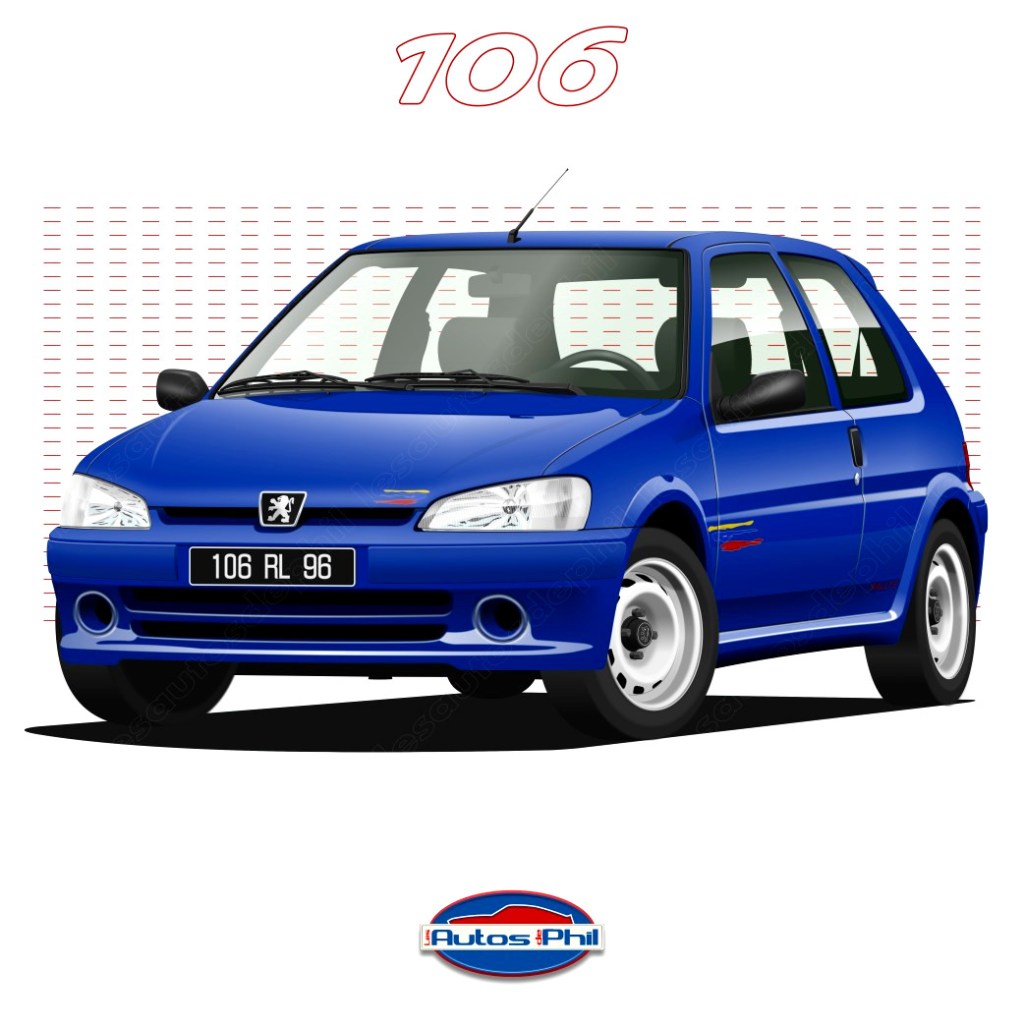
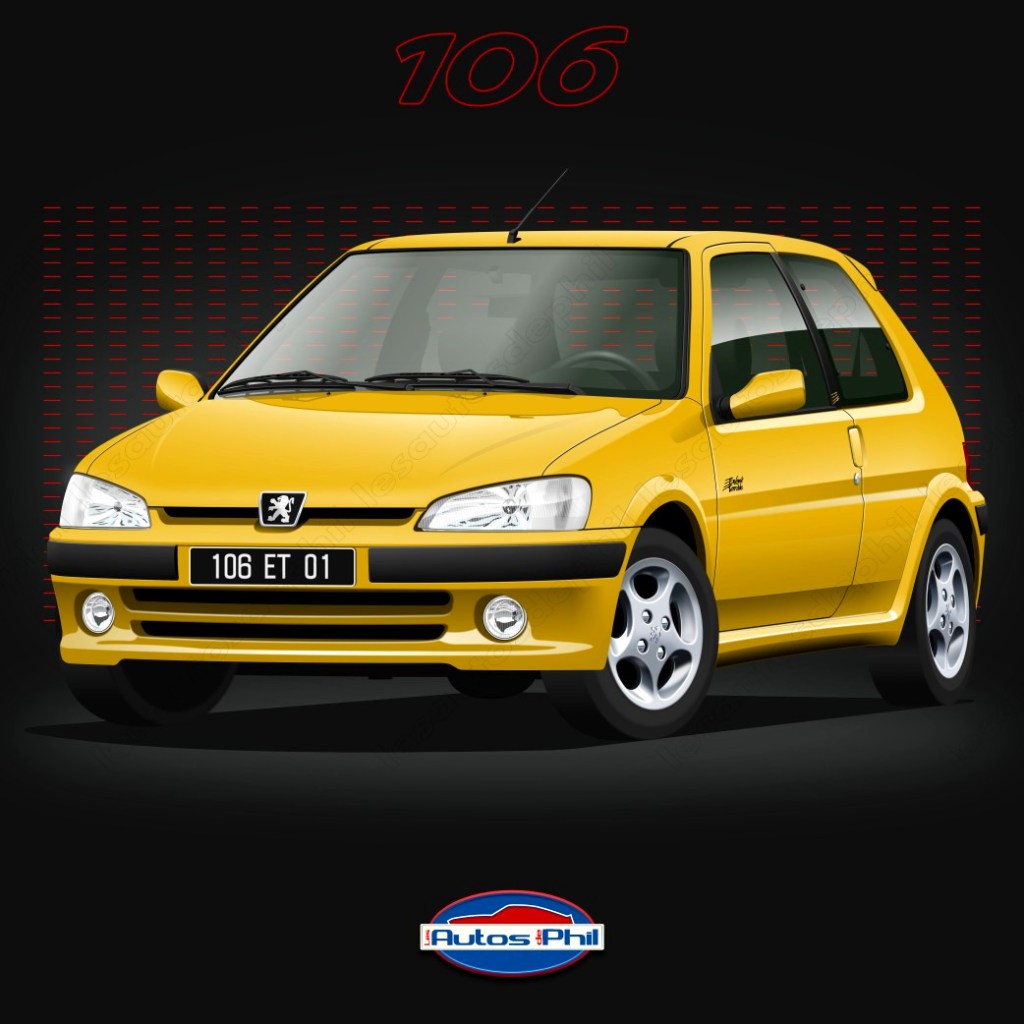
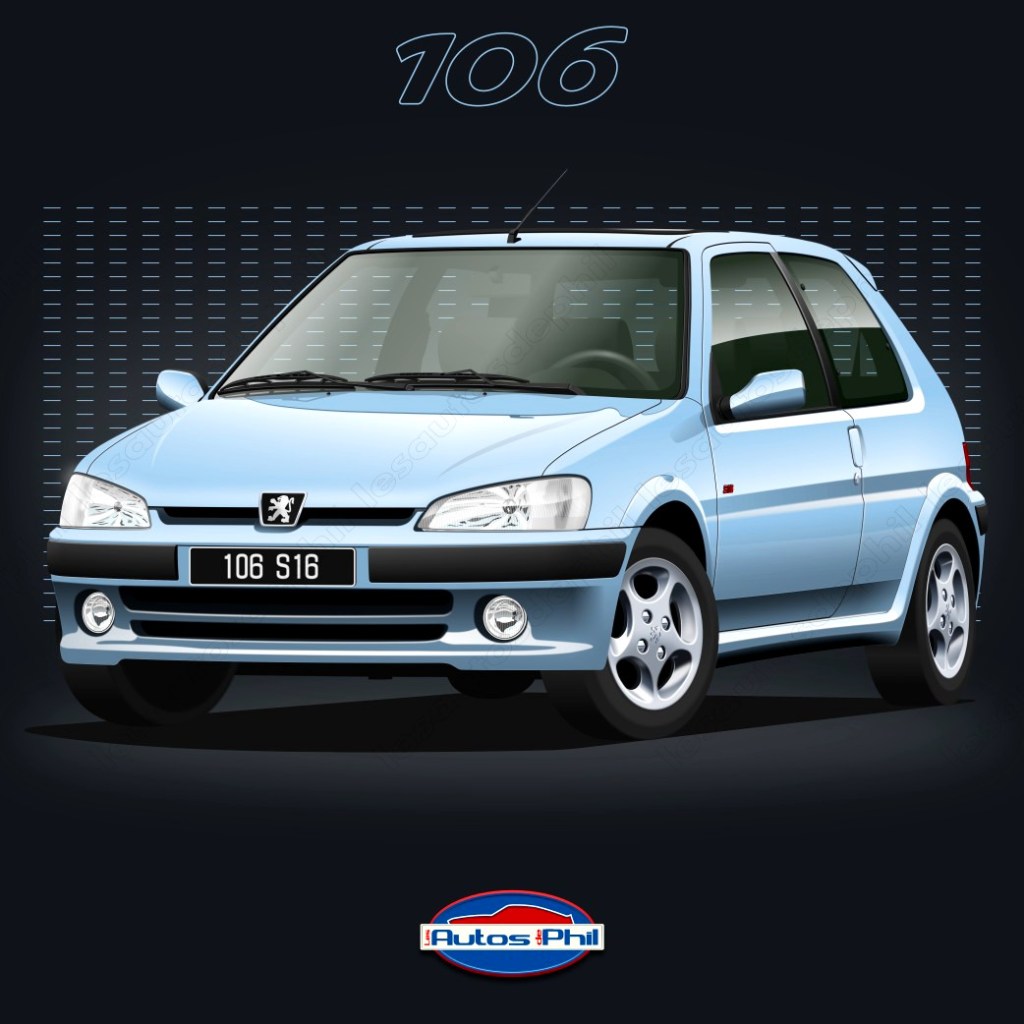
Peugeot 106 MK 2, Rallye, Enfant Terrible, S16 (Click on images to enlarge)
Affiche 106 – 106 poster
FR – Voici une affiche reprenant certaines versions de la 106.
EN – Here’s a poster featuring some versions of the 106.
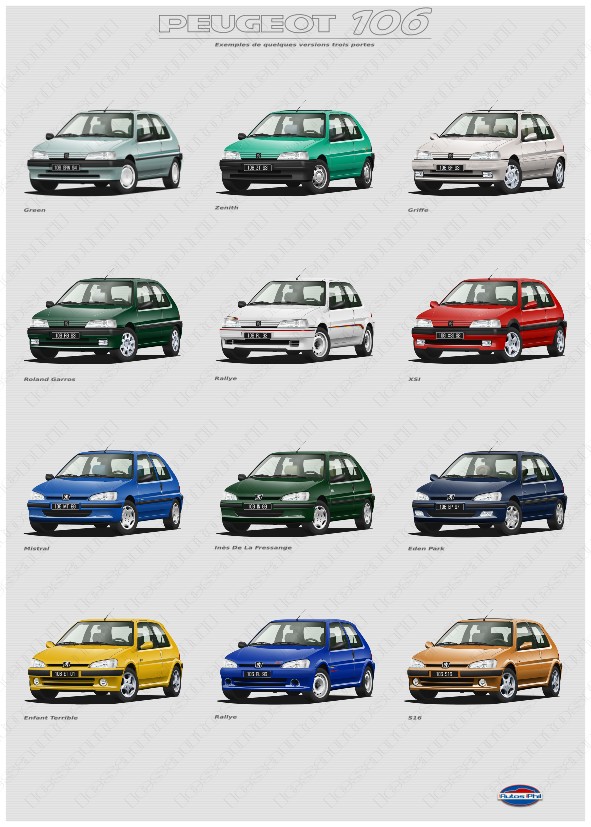
Alors, la 106, véritable remplaçante de la 205 ? – So, was the 106 the true replacement for the 205?
FR – La question reste ouverte. Positionnée à cheval sur deux segments, la 106 n’a jamais eu un rôle simple à définir. Sa première phase manquait sans doute de prestance pour succéder pleinement à la 205. La seconde, plus affirmée, semblait mieux armée pour ce rôle. Mais, au final, n’est-ce pas la 206 qui a véritablement pris la relève de la mythique 205 ?
EN – The question remains open. Straddling two market segments, the 106 never had a clearly defined role. The first phase probably lacked the presence needed to fully succeed the 205, while the second phase seemed far better suited to the task. But in the end, wasn’t it really the 206 that became the true heir to the legendary 205?
Etes-vous intéressé par une des illustrations ci-dessus ?
Contactez-moi sur ce lien et je me ferai un plaisir de vous chiffrer un projet identique ou personnalisé à vos désirs.
Are you interested in one of the illustrations above?
Contact me via this link and I’ll be happy to provide you with a quote for an identical or customised project.
 Les Autos de Phil
Laisser un commentaire