
Mini 3, an alternative for the 1990s
FR – Après la berline quatre portes sur base Mini (voir article d’août 2025) et la Mini 2 (article de décembre 2025), voici une nouvelle collaboration avec Nate : la Mini 3. Une fois encore, il m’a fourni toute la documentation nécessaire, ses idées et son concept, à moi ensuite de traduire cela en dessin 2D.
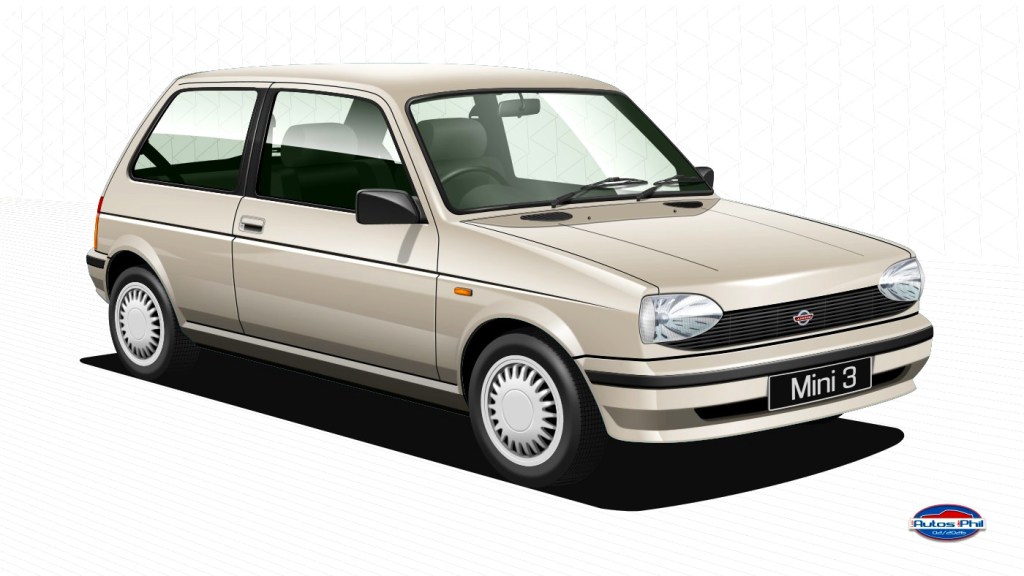
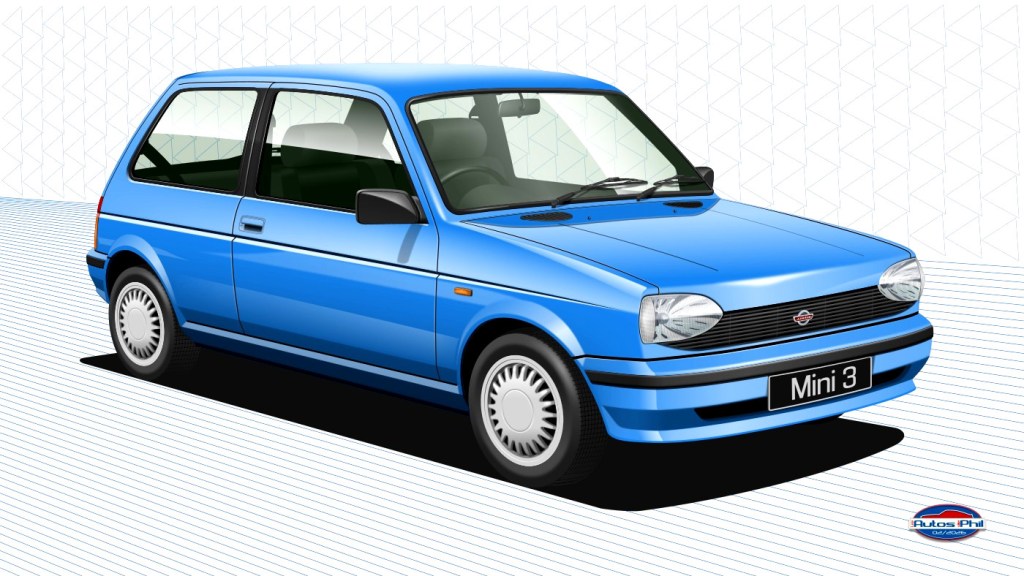
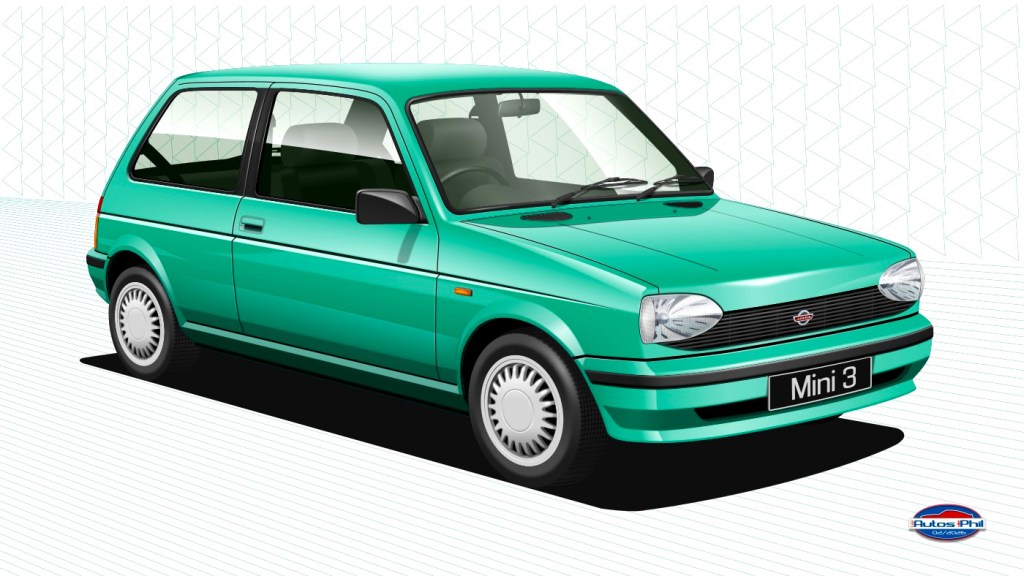
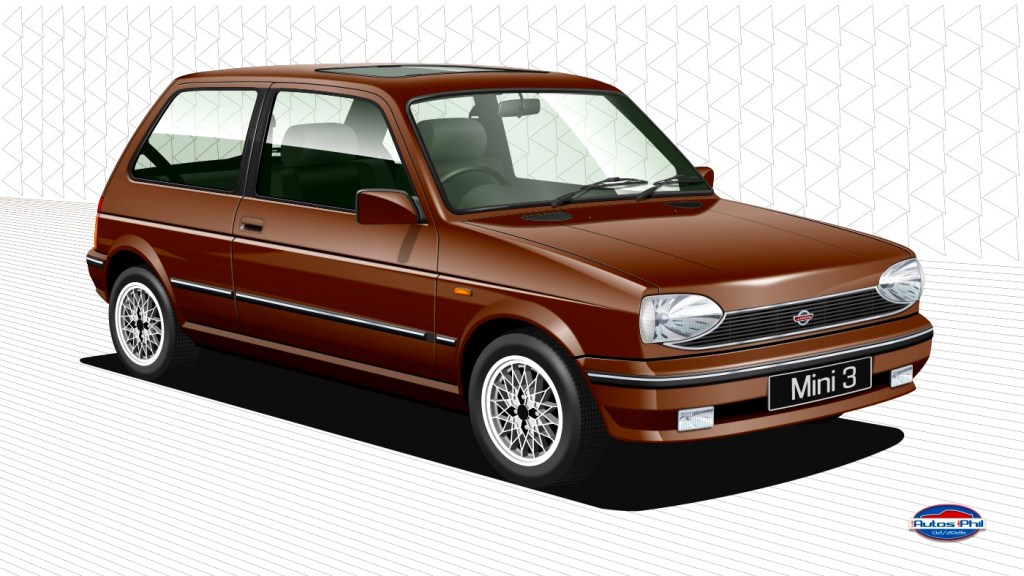
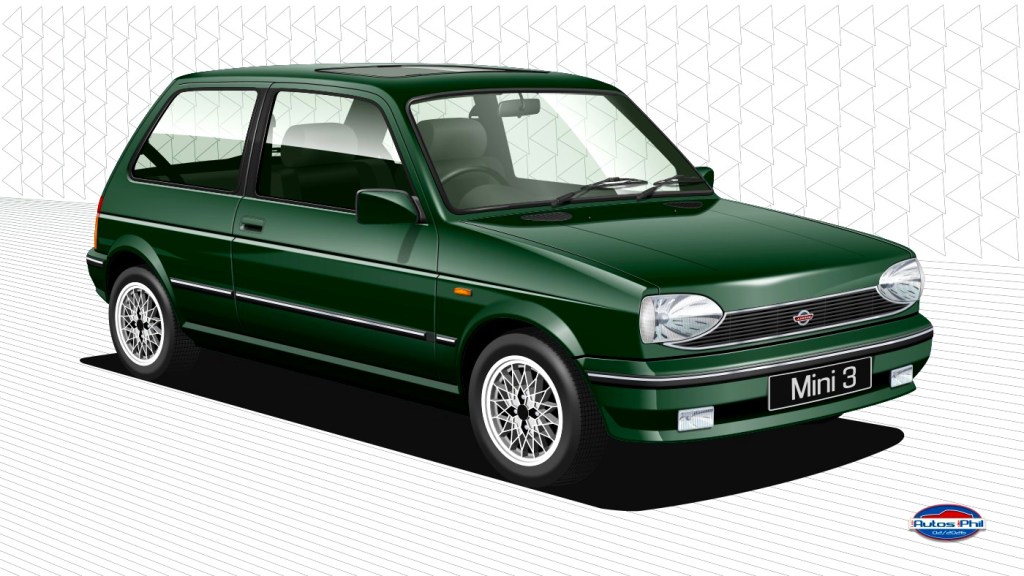
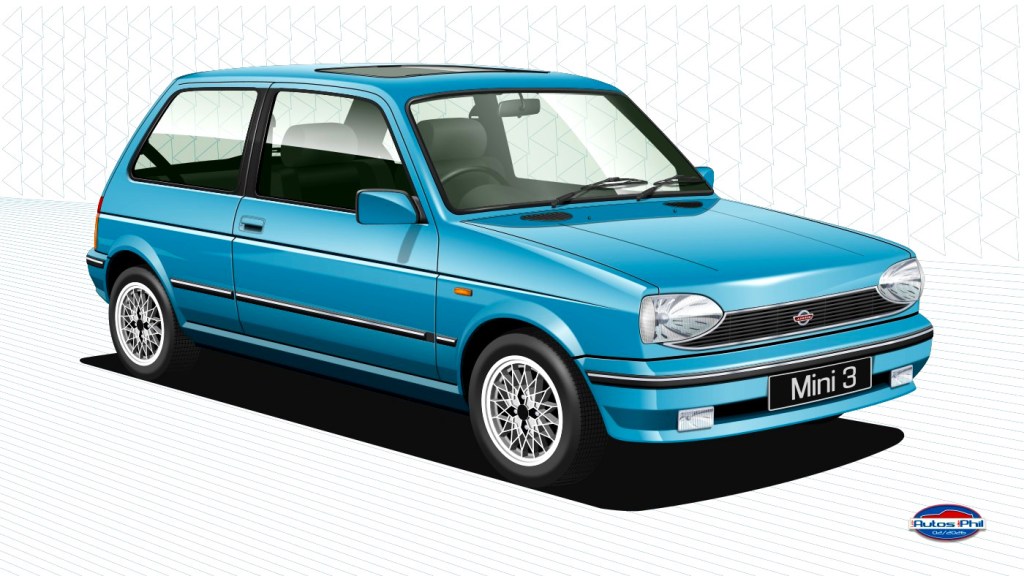
Nous sommes repartis du projet ADO88 en mixant différentes propositions de style, dont une en provenance de Pininfarina. Les phares et la calandre, par exemple, s’inspirent directement de ce dernier. Si le coup de gouge latéral constitue un gimmick typiquement Pininfarina, il n’apparaît pas sur son prototype Mini, mais sur un autre projet (non Pininfarina) ultérieur de la fin des années 80, la Rover R6X. Ce trait de style n’existait pas sur la Mini originelle, mais nous avons jugé utile de le retenir afin de donner un peu de dynamisme à la ligne.
Par ailleurs, alors que notre Mini 2 restait volontairement proche de la Mini 1 en matière de style, pour ce projet nous voulions davantage nous en éloigner, le rendre plus moderne et plus en phase avec son époque. La face avant devait cependant essayer de conserver l’esprit Mini, notamment à travers la forme de la calandre et des phares. Pour ces derniers, nous avons retenu la proposition de Pininfarina, que nous trouvions assez originale, en lieu et place des optiques rondes moins dans l’air du temps. On peut d’ailleurs établir un parallèle avec ce que Volkswagen a réalisé en passant de la Golf 2 à la 3.
À l’arrière, le hayon s’impose comme une évidence puisque toutes les concurrentes adoptent cette solution. La plaque est positionnée entre les feux arrière, directement sur le hayon, comme sur la Mini 1, contrairement à d’autres concurrentes qui ont souvent privilégié un positionnement au niveau du pare-chocs. Quant aux feux arrière, plus question qu’ils soient en excroissance, mais ils devaient être bien intégrés dans la carrosserie. Enfin, la face arrière dispose d’un double galbe, vertical et horizontal, donnant une rondeur évoquant la Mini originale.
Dans notre hypothèse, cette Mini 3 se positionnerait sur le segment A des citadines, face aux Ford KA, Fiat Cinquecento, Lancia Y10 ou Renault Twingo. La gamme de motorisations débuterait avec un 1,0 litre d’entrée de gamme et s’étendrait jusqu’à un 1,4 turbo ou un 1,6 litre atmosphérique pour la version sportive Cooper. Avec une puissance comprise entre 100 et 120 ch, cette dernière pourrait rivaliser avec ses contemporaines, comme par exemple, les Citroën AX GT/GTI ou Peugeot 106 XS/Rallye. Sa période de commercialisation s’étendrait de la fin des années 80 jusqu’au début des années 2000.
EN – Following the four-door Mini-based saloon (see the August 2025 article) and the Mini 2 (December 2025 article), here is a new collaboration with Nate: the Mini 3. Once again, he provided all the necessary documentation, ideas, and overall concept, leaving me to translate it into a 2D design.
We went back to the ADO88 project, blending various styling proposals, including one from Pininfarina. The headlights and grille, for instance, are directly inspired by that design. While the side character line is a typically Pininfarina-style feature, it does not appear on their Mini prototype but rather on a later, non-Pininfarina project from the late 1980s, the Rover R6X. This styling cue wasn’t present on the original Mini, but we felt it was worth incorporating to bring a bit more dynamism to the overall shape.
Whereas our Mini 2 intentionally stayed very close to the original Mini in terms of styling, this project aimed to move further away from it, making it more modern and in tune with its era. The front end, however, still needed to retain a Mini spirit, particularly through the shape of the grille and headlights. For the latter, we opted for the Pininfarina proposal, which we found quite original, instead of the traditional round lamps that felt less contemporary. In that sense, a parallel can be drawn with what Volkswagen did when moving from the Golf Mk2 to the Mk3.
At the rear, a hatchback layout was the obvious choice, as all its competitors had adopted it. The license plate is positioned between the rear lights, directly on the tailgate, as on the original Mini, unlike many rivals that placed it on the bumper. As for the rear lights, they are no longer protruding but fully integrated into the bodywork. Finally, the rear end features a double curvature—both vertical and horizontal—giving it a rounded look reminiscent of the original Mini.
In our scenario, this Mini 3 would sit in the A-segment city car category, competing with models such as the Ford Ka, Fiat Cinquecento, Lancia Y10, and Renault Twingo. The engine lineup would start with an entry-level 1.0-litre unit and extend up to either a turbocharged 1.4 or a naturally aspirated 1.6 for the sporty Cooper version. With an output between 100 and 120 hp, the latter could hold its own against contemporaries such as the Citroën AX GT/GTI or Peugeot 106 XS/Rallye. Its production run would span from the late 1980s through to the early 2000s.
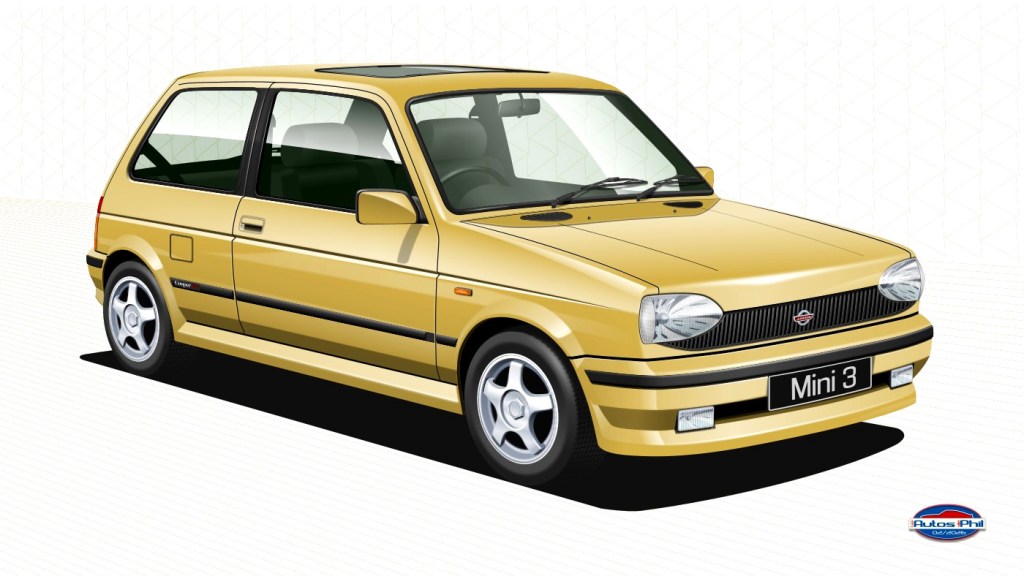
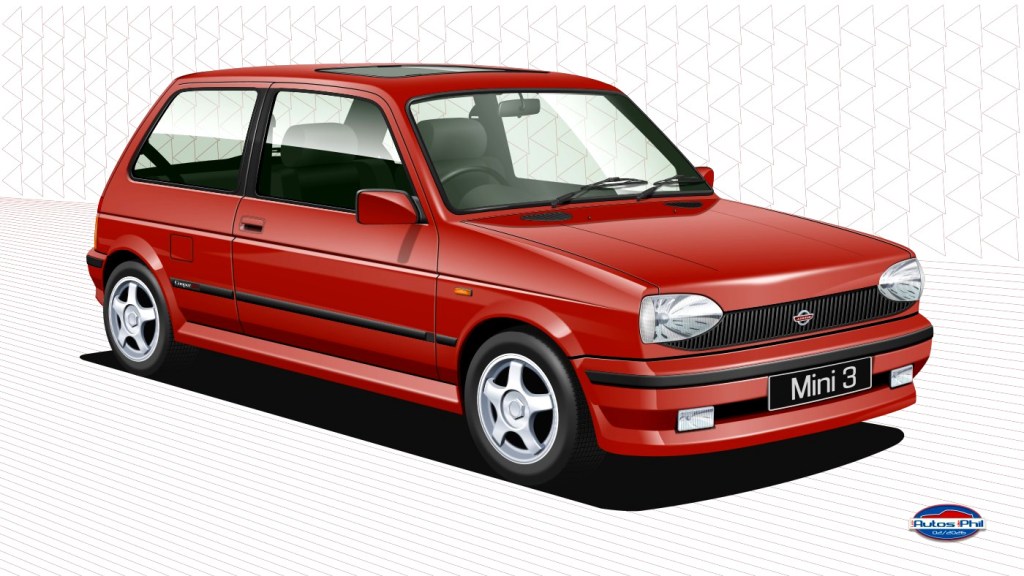
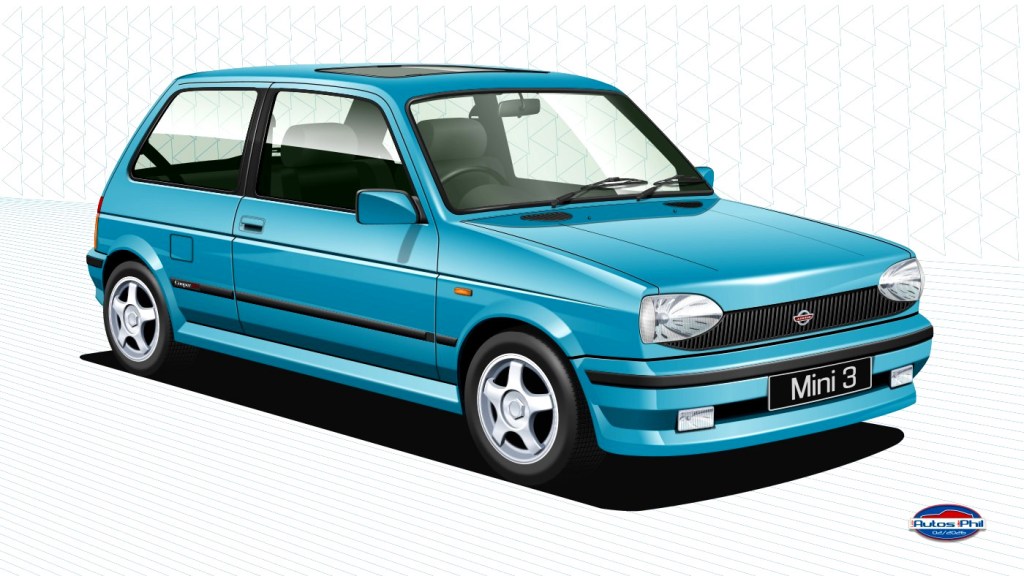
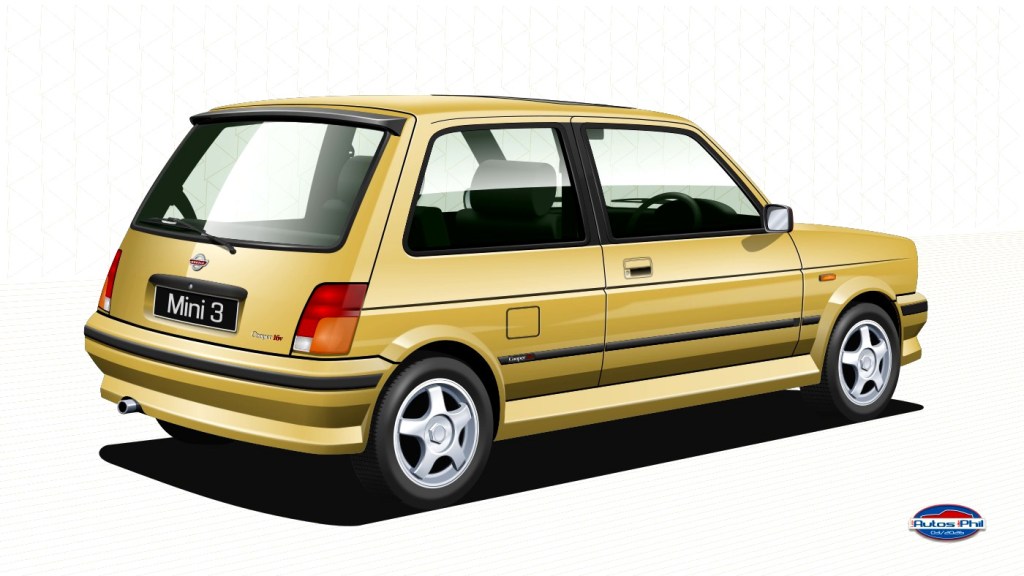
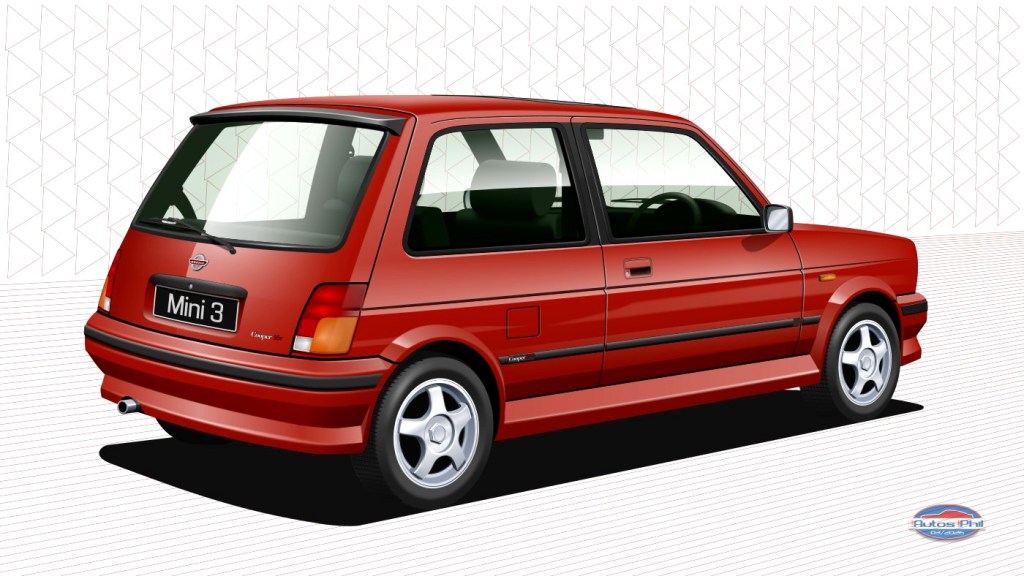
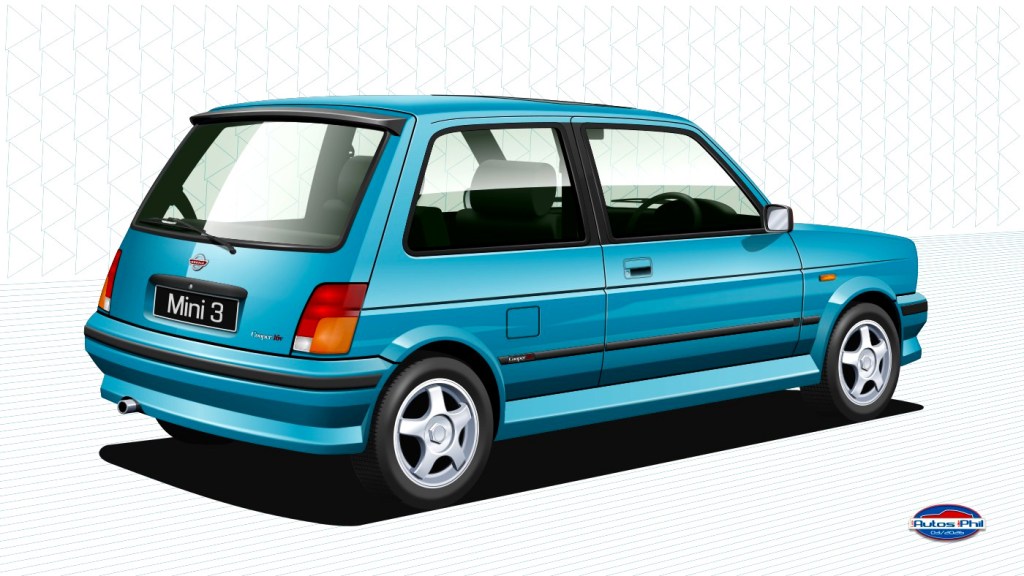
FR – Nous avons décliné cette Mini 3 en trois versions : l’entrée de gamme « City », dont l’équipement et la présentation se concentrent sur l’essentiel ; le haut de gamme « Vanden Plas », avec ses nombreux chromes et ses jantes aluminium rappelant le design BBS et la sportive « Cooper », au design typique des sportives de l’époque.
EN – We envisioned this Mini 3 in three versions: the entry-level “City,” focused on essentials in both equipment and presentation; the upscale “Vanden Plas,” featuring extensive chrome detailing and BBS-style alloy wheels; and the sporty “Cooper,” with styling cues typical of performance models of the era.
FR – Que pensez-vous de cette proposition ? N’hésitez pas à commenter.
Nota : si vous voulez creuser le sujet des prototypes cités dans cet article (ADO88 et Rover AR6), je vous invite à visiter le site anglais https://www.aronline.co.uk/ qui regorge d’informations très fouillées sur l’automobile britannique.
EN – What do you think of this proposal? Feel free to share your thoughts.
Note: if you’d like to explore the prototypes mentioned in this article (ADO88 and Rover R6), I recommend visiting the UK-based website https://www.aronline.co.uk/ which offers in-depth information on British automotive history.
 Les Autos de Phil
Laisser un commentaire