
FR – Lors des congés d’hiver 2024, j’ai lu la biographie définitive d’Enzo Ferrari, écrite par Luca Dal Monte. Cette lecture m’a donné envie de dessiner une Ferrari. Mais laquelle ?
Au départ, il me semblait évident de représenter la toute première Ferrari. Cependant, en la découvrant, son style assez quelconque ne m’a guère enthousiasmé. Il y a une raison à cela : toute la vie d’Enzo étant tournée vers la course automobile, sa priorité était le moteur, qu’il considérait comme l’élément déterminant pour remporter une course.
En effet, la fameuse Scuderia Ferrari était initialement une écurie faisant courir des voitures d’autres marques, principalement italiennes, et surtout des Alfa Romeo. Ce n’est qu’à la fin de la Seconde Guerre mondiale qu’Enzo créera ses propres voitures, toujours avec une vocation prioritairement sportive.
Les modèles civils, eux, étaient destinés à de riches gentlemen drivers qui couraient en privé. Leurs ventes permettaient de financer le programme sportif de la marque.
Hormis le moteur, Enzo Ferrari accordait peu d’importance aux éléments mécaniques secondaires, et encore moins à l’esthétique de ses voitures — du moins jusqu’à sa rencontre avec les carrossiers Pininfarina et Scaglietti. Ceux-ci réussirent à le convaincre de l’intérêt d’un design raffiné. Ce fut le début d’une longue et fructueuse collaboration, à l’origine de nombreux modèles devenus emblématiques.
Mais revenons à mon choix de modèle. J’ai bien sûr pensé aux 328 GTB, 288 GTO de 1984 ou encore à la F40. Toutefois, je préférais m’orienter vers un modèle plus ancien. La série des 250 GT, incontournable dans l’histoire de Ferrari, s’est rapidement imposée comme une évidence — en grande partie grâce à la légendaire GTO.
EN – During the winter holidays of 2024, I read the definitive biography of Enzo Ferrari, written by Luca Dal Monte. That book sparked a desire in me to draw a Ferrari. But which one?
At first, I thought it obvious to start with the very first Ferrari ever built. But when I looked it up, I was underwhelmed—its styling didn’t quite excite me. There’s a reason for that: Enzo Ferrari’s entire life revolved around racing. His main concern was always the engine, which he saw as the key component for winning on the track.
In fact, the famous Scuderia Ferrari was originally a racing team that ran cars from other manufacturers—mainly Italian brands, especially Alfa Romeo. It wasn’t until the end of World War II that Enzo began creating his own cars. And again, these were first and foremost racing machines.
Road models were developed with wealthy gentlemen drivers in mind—enthusiasts who competed privately. The income from those sales helped finance Ferrari’s racing program.
Aside from the engine, Enzo paid little attention to other mechanical parts—and even less to styling—until he crossed paths with coachbuilders Pininfarina and Scaglietti. These two managed to convince him of the importance of a beautifully streamlined body. That was the start of a long and fruitful collaboration that would go on to define the Ferrari legend.
But back to my choice of Ferrari. I naturally considered the 328 GTB, the 1984 288 GTO, and of course the iconic F40. Still, I felt more drawn to an older model. The 250 GT series, a cornerstone in Ferrari’s history, quickly became the obvious choice—largely thanks to the legendary GTO.
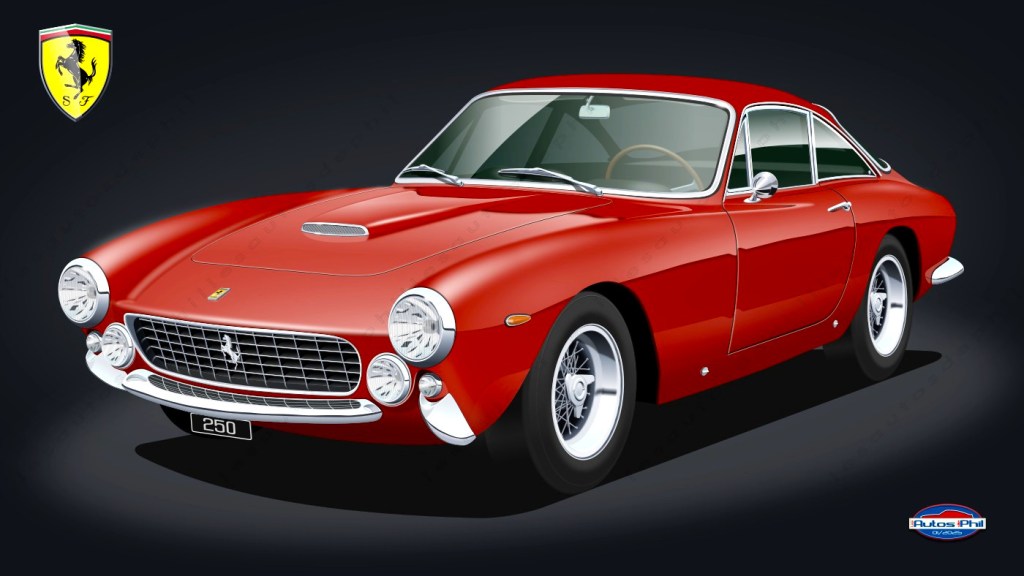
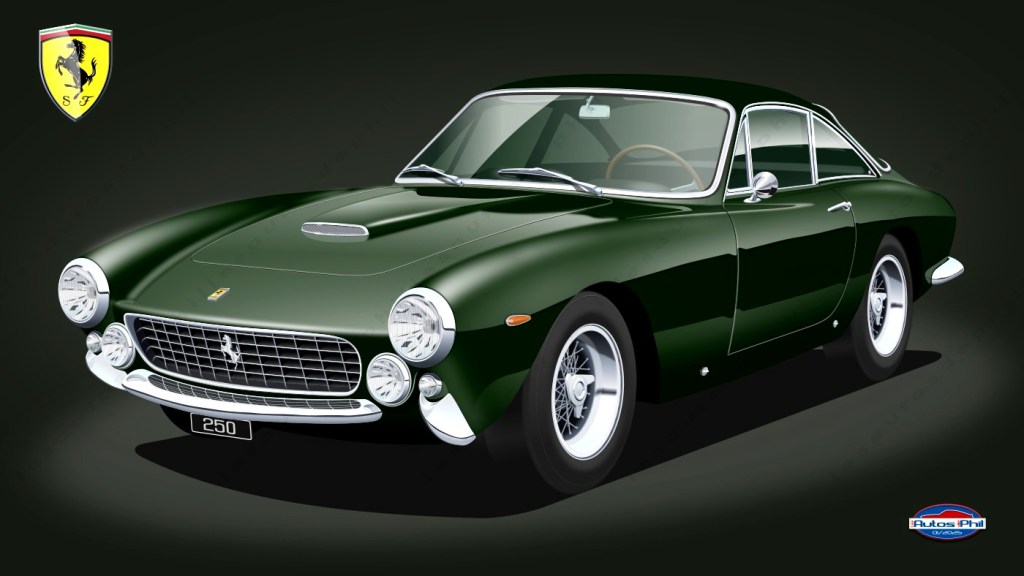
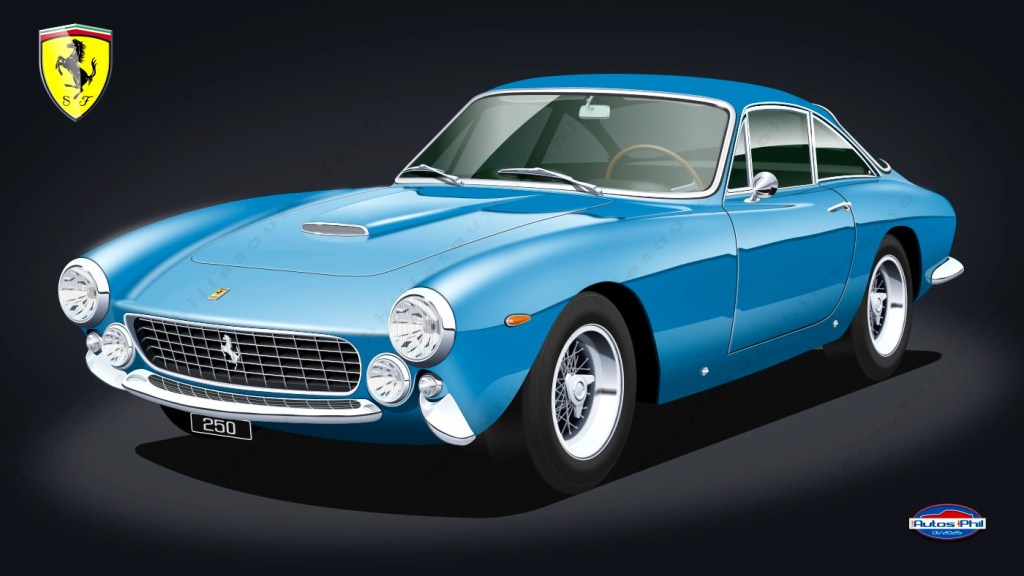
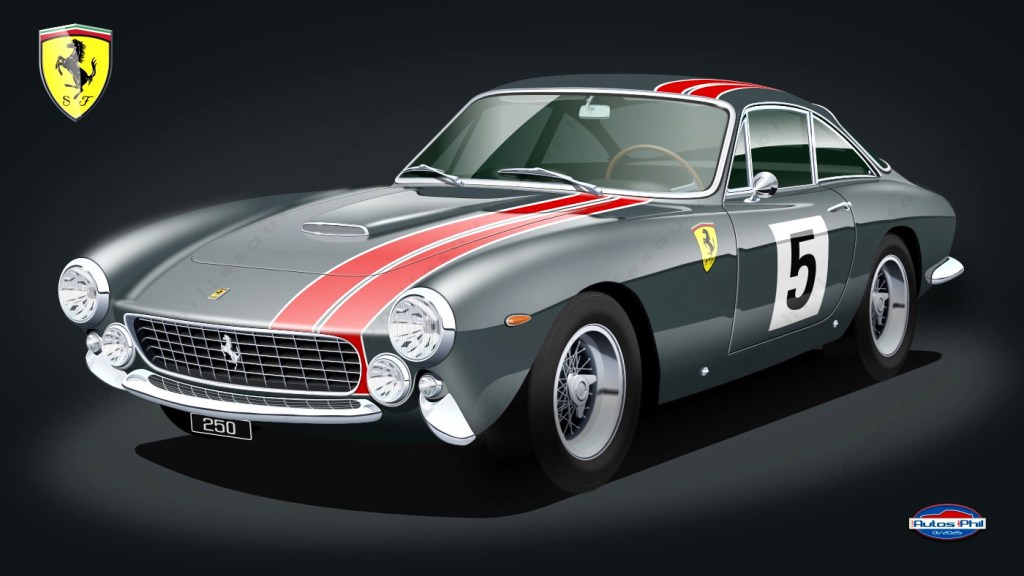
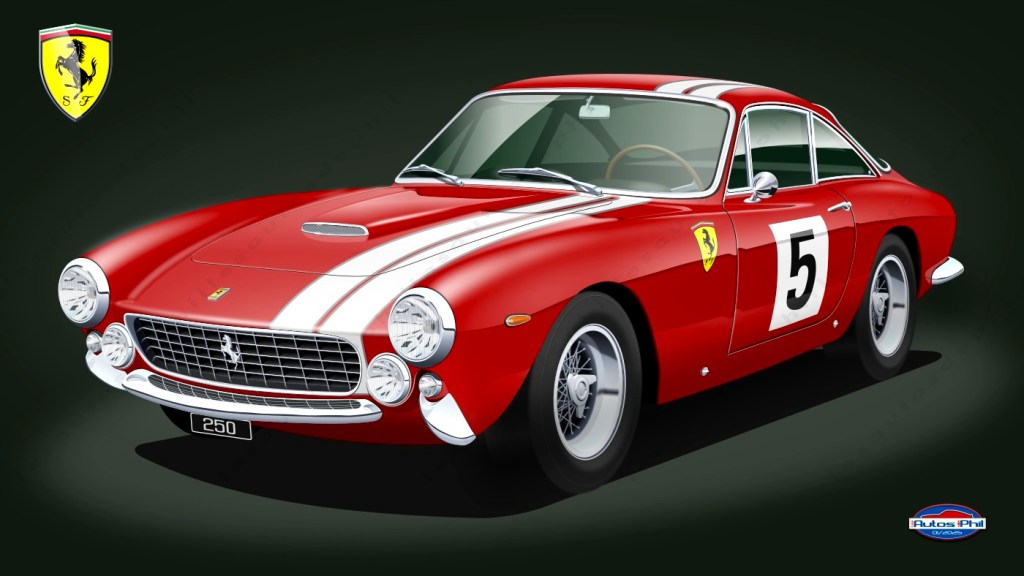
FR – J’ai donc finalement jeté mon dévolu sur la 250 GT Berlinetta « Lusso ». Présentée pour la première fois au Salon de Paris en 1962, son design racé et élégant, signé Pininfarina, en fait l’une des plus belles Ferrari jamais conçues. Sa finition et sa présentation, plus soignées que celles de sa devancière, la destinaient davantage à une utilisation civile que purement sportive.
Sa dénomination « Lusso », qui signifie « luxe » en italien, bien que non officielle, est couramment utilisée par les passionnés pour la distinguer du modèle précédent. Elle reprend l’empattement short wheel base (SWB), mais avec un châssis modifié, plaçant le moteur plus en avant afin de gagner en habitabilité.
Animée par un V12 de 3 litres développant 250 ch, alimenté par trois carburateurs double corps, la « Lusso » est capable d’atteindre 240 km/h.
Sa carrière fut relativement brève : elle s’acheva en septembre 1964, après 350 exemplaires produits.
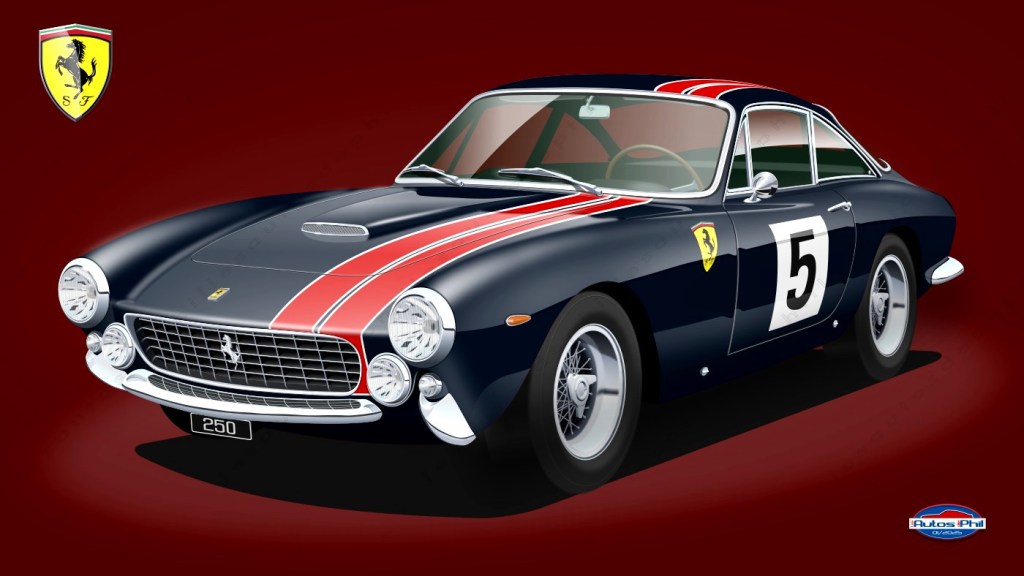
On associe trop souvent la couleur rouge à Ferrari — sans doute en raison de la course automobile. Pourtant, les modèles civils offraient d’autres options chromatiques, dont j’ai repris quelques variantes dans mes illustrations. Bien sûr, je ne pouvais faire l’impasse sur le rouge… ni résister à l’envie de proposer une version plus sportive !
EN – I finally set my sights on the 250 GT Berlinetta “Lusso.” Unveiled at the 1962 Paris Motor Show, its elegant, racy design—crafted by Pininfarina—makes it one of the most beautiful Ferraris ever built. Its finish and presentation are more refined than the previous model, as it was aimed more at road use than racing.
The name “Lusso,” meaning “luxury” in Italian, wasn’t official, but it’s commonly used by connoisseurs to distinguish it from earlier versions. While it retained the “short wheelbase” layout, it featured a modified chassis that moved the engine further forward to increase cabin space.
Powered by a 3.0-liter V12 producing 250 horsepower, fed by three twin-barrel carburetors, the Lusso could reach a top speed of 240 km/h.
Its production run was relatively short, ending in September 1964, with just 350 units built.
Ferrari is often strongly associated with the color red—likely due to its racing heritage—but civilian models could be ordered in a variety of colors. I incorporated some of those alternatives in my illustrations. Of course, I couldn’t resist including a red version… or creating a sportier take as well.


 Les Autos de Phil
Laisser un commentaire