

Saab 900 Turbo Coupé, a Swedish Icon
FR – C’est avec un pincement au cœur que j’ai accueilli la fin de Saab Automobiles en 2015 car, bien que je n’aie jamais possédé l’un de leurs produits, j’éprouve une certaine affection pour cette marque.
Affection que j’ai pu développer dans un cadre professionnel, en travaillant comme sous-traitant pour Saab, ce qui m’a même conduit à me rendre à Trollhättan en 1993. Plus récemment, lors d’un road-trip suédois à l’été 2024, je n’ai pas pu résister à l’envie d’y faire un détour pour voir ce qu’il restait de l’usine. Elle est toujours debout… mais vide. Le projet de reprise pour y fabriquer des véhicules électriques a finalement avorté.
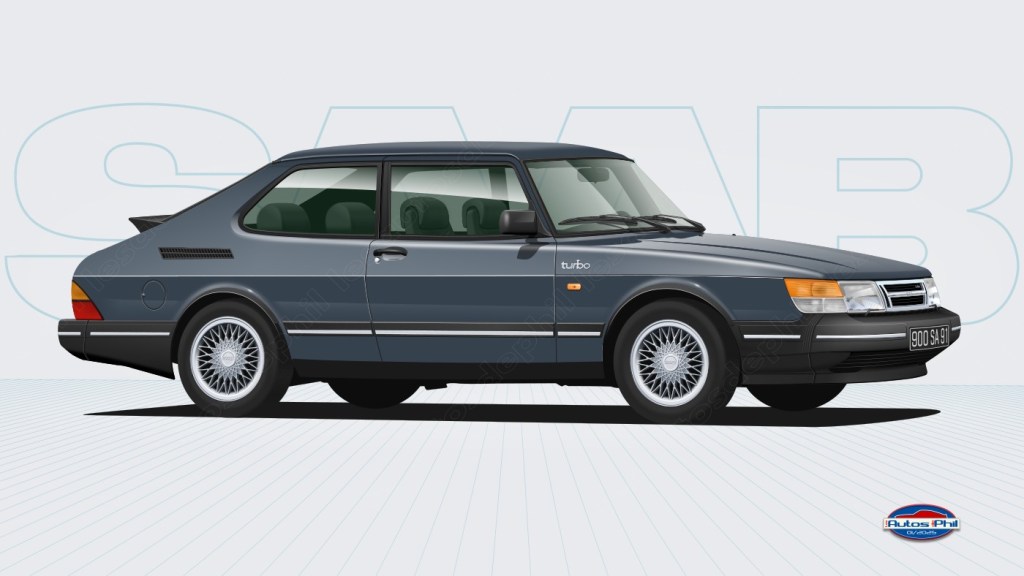
Mais mon intérêt pour la marque remonte à bien plus loin, et il est étroitement lié à la 900 de première génération. Ce modèle, présent au catalogue de 1978 à 1993, a notamment brillé par une déclinaison emblématique qui a largement contribué à sa renommée : la 900 Turbo coupé.
EN – It was with a heavy heart that I witnessed the end of Saab Automobiles in 2015. Although I never owned one of their vehicles, I’ve always had a soft spot for the brand.
That fondness grew through my professional experience, having worked as an automotive subcontractor for Saab, which even took me to Trollhättan in 1993. More recently, during a Swedish road trip in the summer of 2024, I couldn’t resist making a detour to see what remained of the old factory. It’s still standing… but empty. The attempt to relaunch it for electric vehicle production sadly fell through.
But my interest in the brand goes back much further, and is closely tied to the first-generation 900. Produced from 1978 to 1993, the model had a flagship version that truly left its mark, the 900 Turbo Coupé.
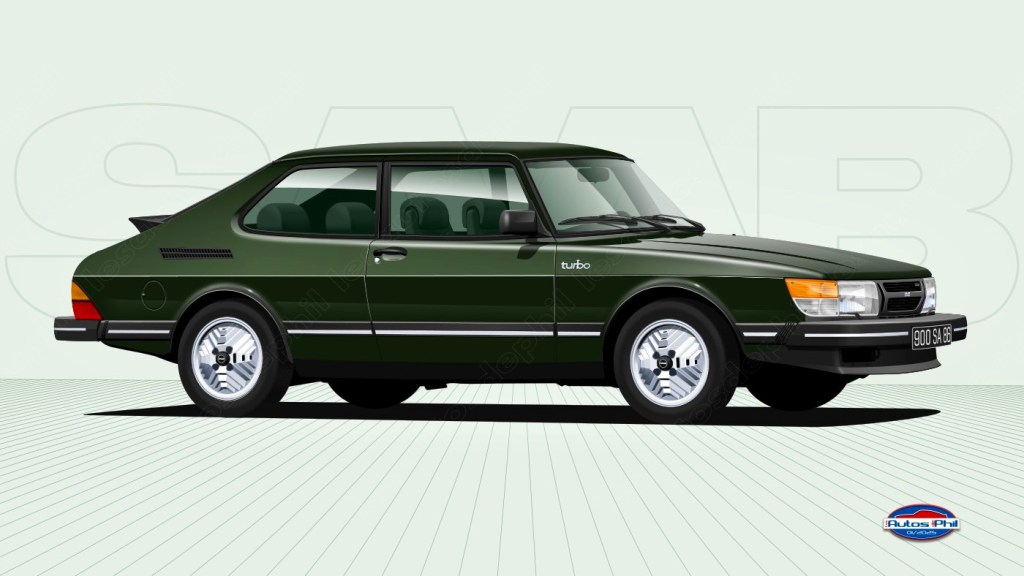
FR – Saab, n’ayant pas les moyens d’investir dans un moteur V6 ou V8, s’est tournée vers la technologie miracle du turbo, devenant ainsi l’un des pionniers de sa démocratisation en grande série. À l’époque, grâce à BMW, Porsche, ou encore Renault, le turbo était synonyme de sportivité et de modernité. Mais pour sa 900, le constructeur suédois a préféré une approche plus « grand tourisme » que véritablement sportive, en réglant le turbo de façon progressive, pour plus de souplesse.
EN – Lacking the resources to develop a V6 or V8 engine, Saab turned to the miracle technology of turbocharging, becoming one of the first manufacturers to adopt it on a large scale. At the time, thanks to BMW, Porsche, and even Renault, turbo meant performance and modernity. But Saab took a different route with the 900, opting for a more grand touring feel than pure sportiness, with a turbo tuned for smoother, more progressive power delivery.
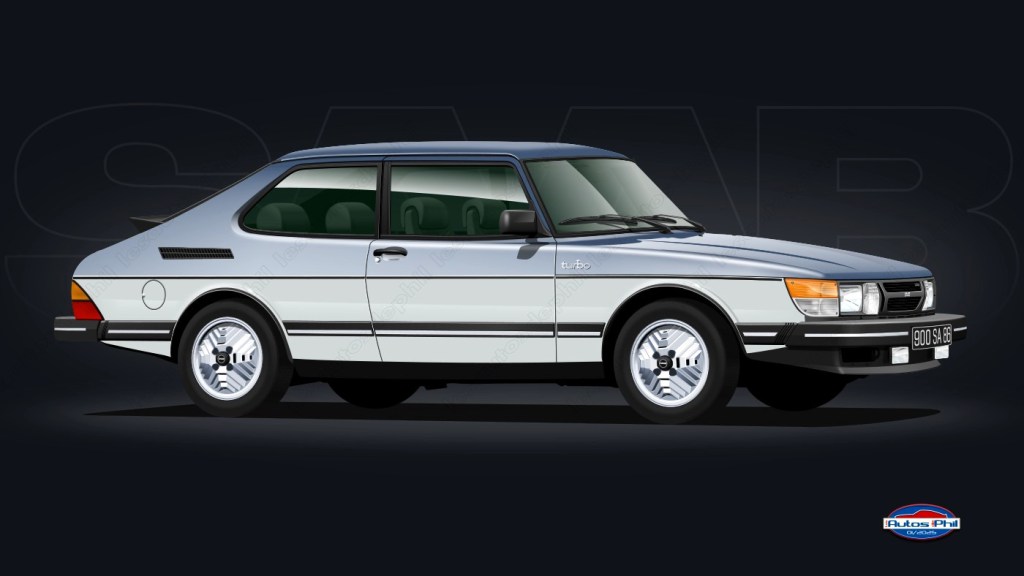
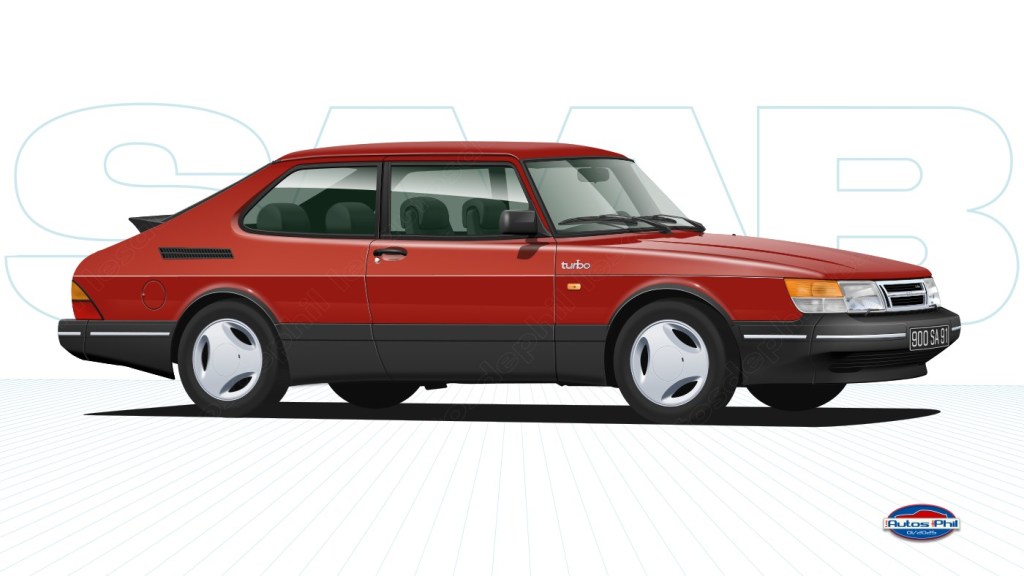
FR – Saab est même allé plus loin en greffant une culasse à seize soupapes sur son moteur quatre cylindres, faisant de la 900 l’une des premières voitures civiles à en bénéficier, cette technologie étant alors plutôt réservée à la compétition. Grâce à cette évolution, la puissance faisait un bond de 30 chevaux pour culminer à 175 ch. Le tout accompagné d’un kit carrosserie « Aero » qui lui conférait un supplément d’exclusivité. Une version qui faisait rêver beaucoup de monde.
EN – They went even further by adding a 16-valve cylinder head to their four-cylinder engine, making the 900 one of the first civilian cars to feature this technology, which was still mostly seen on race cars back then. This upgrade boosted the output by 30 horsepower, reaching a peak of 175 hp. On top of that, it came with an “Aero” body kit that added a real touch of exclusivity. It was a version many people dreamed of.
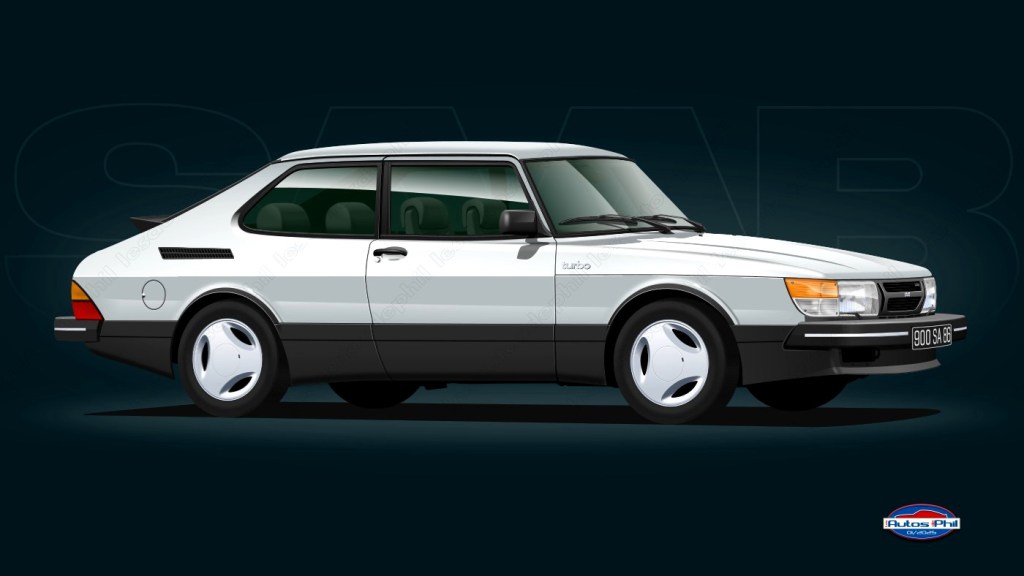
FR – Son design, il faut l’avouer, était contraint par la réutilisation d’une bonne partie de la caisse de la 99. Résultat : un pare-brise très vertical qui trahissait un peu son âge. En revanche, l’arrière « fastback » restait dans l’air du temps et donnait à l’ensemble une ligne dynamique. Un détail que j’aimais particulièrement : les jantes « Inca », inspirées du célèbre temple du même nom. Leur design original tranchait franchement avec ce que proposait la concurrence.
EN – Its design was somewhat constrained by the reuse of much of the bodywork from the older Saab 99, which gave it a very upright windshield that dated it a little. However, the fastback rear still looked fresh at the time and gave the car a dynamic profile. One particular detail I really liked: the “Inca” rims, inspired by the famous temple. Their unique design stood out sharply from anything else on the market.
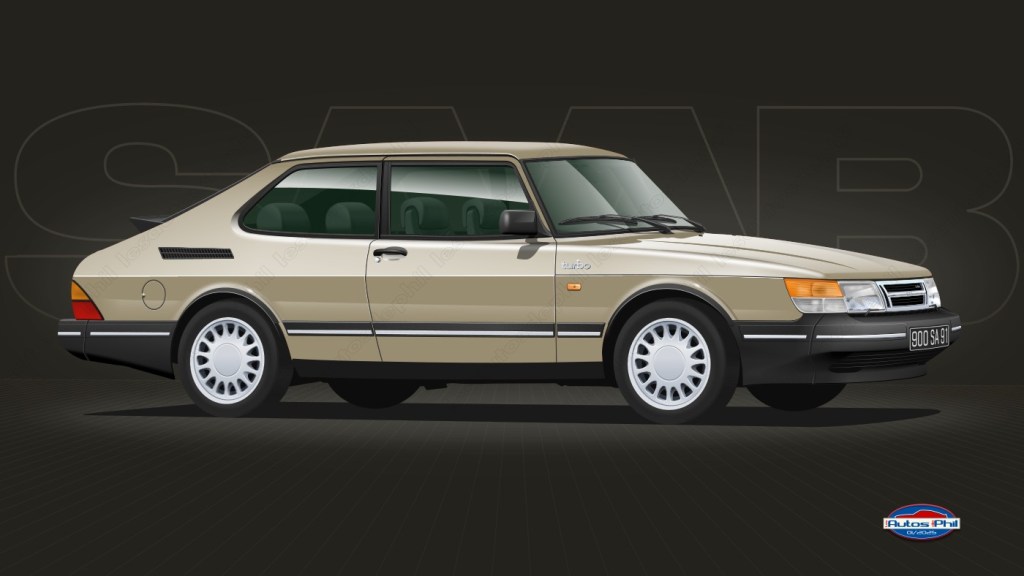
FR – Pour promouvoir la 900, Saab a fait appel à une célébrité suédoise de l’époque : le tennisman Björn Borg, alors au sommet de sa carrière. Selon la publicité, les « Super Suédois » — la 900 Turbo et Borg — étaient faits pour s’entendre. En plus de la modernité technologique du turbo, cette référence sportive ajoutait une touche de fraîcheur à l’image de la voiture.
EN – To promote the 900, Saab enlisted a major Swedish celebrity of the late ’70s, tennis champion Björn Borg, then at the peak of his career. According to the ad campaign, the two “Super Swedes” — the 900 Turbo and Borg — were a perfect match. Beyond the turbo’s modern appeal, this sports connection gave the car a cool, contemporary image.
FR – Certes, son tarif élevé la plaçait dans la catégorie que l’on qualifierait aujourd’hui de « premium ». Mais elle a su séduire une clientèle bien précise, notamment parmi les professions libérales, qui voulaient se distinguer des bourgeoises Mercedes et des sportives BMW. La 900 incarnait à merveille une forme d’équilibre entre ces deux mondes.
EN – By the way, its high price placed it in what we’d now call the premium category. But it found a strong following, particularly among liberal professionals, who appreciated the Swedish alternative to the more traditional Mercedes or sporty BMWs. The 900 struck a perfect balance between both worlds.
 Les Autos de Phil
Laisser un commentaire